A blocked gutter on a commercial property is rarely a small problem. Water can overflow into eaves, wall cavities, walkways and loading areas, while wet leaf litter adds unnecessary fire risk and maintenance costs. To choose commercial gutter protection properly, you need more than a product that looks neat from ground level. You need a system suited to the building, roof design, surrounding trees and the volume of water it must manage during Sydney downpours.
Commercial gutter guard is an investment in protecting the building and reducing repeated cleaning work. The right system keeps debris out while allowing rainwater to enter the gutter efficiently. The wrong one can restrict flow, collect debris on top or create access issues for future maintenance.
Start with the property, not the gutter guard
Commercial sites vary widely. A small strata block, warehouse, school, shopfront, office building and industrial facility can all have very different roof drainage requirements. Before selecting a guard, inspect the whole roof area: gutter profile, downpipe locations, roof pitch, valleys, skylights, air-conditioning units and areas where water naturally concentrates.
Box gutters deserve particular attention. They often sit between roof sections and carry significant volumes of water. Because they are less visible from the ground, blockages can go unnoticed until water enters the building. A guard system for box gutters must allow strong water flow while preventing leaves, twigs and roof debris from building up in the channel.
Also look beyond the roofline. Large trees close to the property, especially gums, paperbarks, pines and palms, affect the type and quantity of debris your gutters collect. Fine leaf matter, blossoms, bark and needles behave differently to large dry leaves. A guard that handles broad leaves may not be suitable for fine debris that can settle into gaps or collect across the mesh surface.
Choose commercial gutter protection with the right mesh
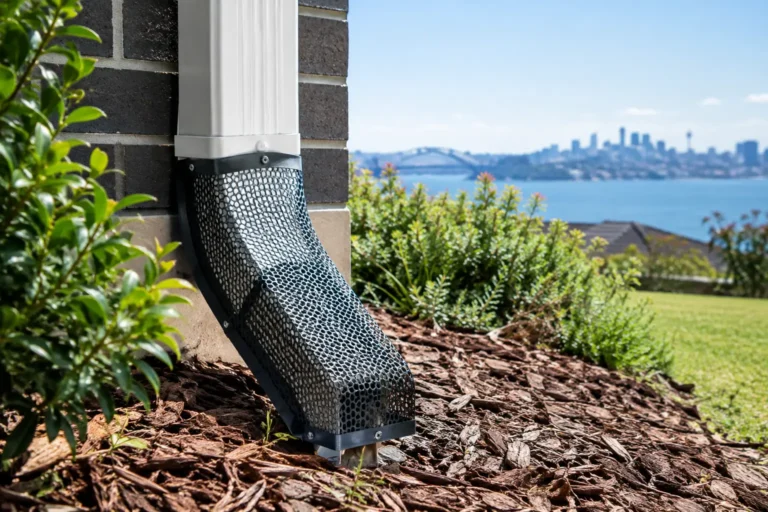
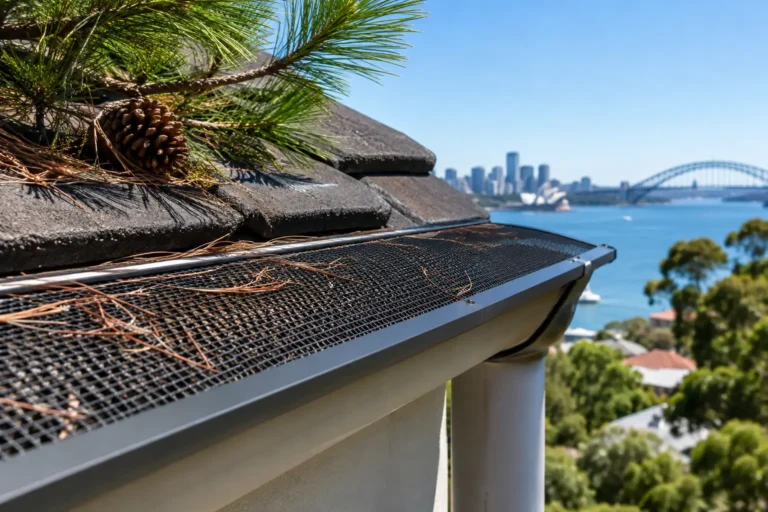
For many commercial properties, aluminium mesh gutter guard is a practical long-term choice. Quality mesh is lightweight, corrosion-resistant and designed to sit securely over the gutter opening. It helps prevent larger debris from entering while allowing water to drain through into the gutter below.
Material quality matters. Thin, poorly secured mesh can lift in high winds, sag under debris or deteriorate sooner than expected. Commercial roofs are exposed to sun, rain, wind and accumulated organic matter year after year, so the guard needs to be built for local conditions rather than treated as a short-term fix.
The opening size in the mesh also matters. Very large openings can let fine debris enter the gutter. Extremely fine mesh may need more frequent surface cleaning in heavily leafed areas because small material can settle on top. There is no single mesh size that suits every building. The right option depends on the debris load, roof pitch and how water moves across the roof.
A professional installer should explain the trade-off clearly. The aim is not to make the roof completely maintenance-free. It is to substantially reduce gutter blockages and make ongoing maintenance safer, less frequent and more predictable.
Make sure water capacity comes first
A gutter guard must not compromise drainage. During a heavy storm, water needs a clear path from the roof into the gutter and through the downpipes. If the building has long roof runs, steep sections or large catchment areas feeding into limited guttering, drainage capacity should be assessed before installation.
This is particularly relevant for commercial roofs where a large expanse of metal roofing can send a high volume of water towards one area. Overflow may be caused by blocked gutters, but it can also point to undersized gutters, inadequate downpipes or poorly managed roof valleys. Gutter protection works best as part of a properly functioning drainage system.
Look for an installer who checks the existing gutter condition before fitting guards. Gutters that are rusted through, loose, incorrectly pitched or holding standing water should be addressed first. Covering an existing problem does not solve it.
Installation quality is as important as the product
A premium mesh guard can still fail if it is installed poorly. Commercial gutter protection needs to be fitted securely to suit the roof profile, without creating gaps where debris can enter or sharp edges that could damage roof materials.
The installation should account for roof access, safety requirements and future servicing. On some buildings, the work may involve difficult access, high rooflines or areas around solar panels and plant equipment. This is not a job for a general handyman with a ladder and a roll of mesh.
Professional preparation makes a major difference. Before guards are installed, gutters should be cleaned thoroughly, downpipes checked and roof debris removed. This prevents old leaf litter and sludge from being trapped underneath a new system. A proper site clean-up after the work also matters, particularly around customer entrances, car parks and shared strata areas.
For Sydney property owners, DX Gutter Guard provides professional gutter cleaning and preparation alongside premium aluminium mesh installation, with a 20-year workmanship guarantee. That combination helps ensure the system starts clean and is installed for dependable long-term performance.
Consider fire risk in leafy areas
For commercial buildings near bushland, parks or heavily treed suburbs, gutter debris is more than a drainage concern. Dry leaves and twigs in gutters can become fuel for embers during bushfire conditions. Keeping gutters clear is one practical part of reducing combustible material around the building.
Gutter guards can help minimise the build-up of larger debris inside gutters, but they do not remove every maintenance responsibility. Leaves can still settle on roofs, in valleys and on top of the mesh. Regular inspections remain sensible, especially before summer and after major wind events.
If fire risk is a priority, discuss it during the quote stage. The installer can identify problem areas such as roof valleys, concealed gutters and sections beneath overhanging branches. Trimming vegetation where appropriate and maintaining clear roof surfaces will improve the overall result.
Plan for inspection and maintenance
Commercial gutter protection should reduce maintenance, not make it impossible. Ask how the system can be inspected and cleaned in the future. In many cases, debris can be brushed or blown from the roof surface and mesh without needing to remove the guard itself. However, the exact maintenance approach depends on the property and surrounding vegetation.
Properties beneath dense trees may still need seasonal roof checks. Sites with minimal tree cover may need far less attention. After severe storms, it is wise to inspect for branches, accumulated debris and any signs of overflow, even when guards are installed.
A good maintenance plan also protects your investment in the roof and drainage system. Catching a damaged downpipe, loose bracket or build-up in a valley early is far more straightforward than dealing with internal water damage later.
Ask practical questions before accepting a quote
A detailed quote should describe what is included, not simply state a square metre price. Commercial buildings have variables that affect the work, including roof access, height, gutter type, debris levels and whether cleaning is required before installation.
Ask what material will be used, how it will be fixed, whether existing gutter issues will be identified and how the team will manage site safety. It is also reasonable to ask about workmanship cover and what the installer recommends for follow-up maintenance.
Photos are valuable on commercial properties where roof areas are difficult to access. Before-and-after images give owners, strata managers and facilities teams a clear record of the work completed. They also provide reassurance that gutters were cleaned before the new protection was fitted.
The cheapest quote is not always the best value. If it leaves out cleaning, uses inferior material or does not address access and drainage concerns, the property may still face frequent call-outs and preventable repairs. Choose a specialist who can explain the solution in plain language and stand behind the workmanship.
A well-selected gutter guard system gives commercial property owners more control over a task that is often ignored until something goes wrong. Arrange a professional assessment before the next heavy rain or high-fire-risk season, and you can protect the building with a solution matched to the way your roof actually performs.