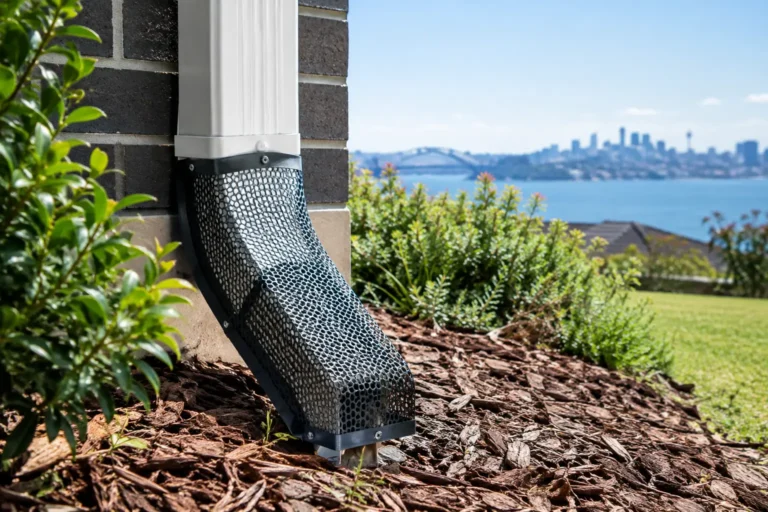
Water pouring over the front edge of a gutter during rain is more than an untidy nuisance. This gutter overflow example shows how a small build-up of leaves can quickly send water where it should never go: down external walls, into roof spaces, across paths and towards the foundations of your property.
For Sydney homeowners and property managers, overflow often appears after a storm, when wet leaves, twigs and roof grit have collected in the gutter or blocked the downpipe. The rain may stop, but the risk does not. Repeated overflow can leave stains, encourage mould and moisture damage, and create avoidable maintenance costs.
A practical gutter overflow example
Picture a single-storey home in a leafy Sydney suburb. A large tree overhangs one side of the roof, dropping leaves and small branches through autumn and after windy weather. The gutters look reasonably clear from ground level, but a thick, wet mass of debris has settled near the downpipe outlet.
When the next heavy shower arrives, rainwater travels down the roof and into the gutter as intended. It reaches the blocked outlet but cannot drain away fast enough. The gutter fills, water rises above the front lip and spills over in a steady sheet.
At first, the overflow lands on the garden bed below. Then the wind pushes it back against the fascia and wall. Water runs down around a window frame, splashes onto the footpath and pools near the base of the house. If this happens regularly, it can contribute to peeling paint, timber deterioration, damp patches and water entering places that should stay dry.
This is a common gutter overflow example because the gutter itself is not necessarily undersized or damaged. The issue is restricted drainage. A clean, correctly functioning gutter and downpipe can move a significant amount of water away from the roof. Once debris blocks that path, even moderate rain can expose the problem.
Why gutters overflow even when they look clear
A gutter can appear fine from the driveway while hiding a blockage in the most important area: the downpipe opening. Debris tends to gather at low points and outlets, where it is compressed by flowing water. Wet leaves can form a dense layer that acts like a plug.
Roof valleys are another frequent source of trouble. They channel a high volume of water into one section of gutter, often carrying leaf litter, bark and roof sediment with it. During a Sydney downpour, that concentrated flow can overwhelm a partly blocked gutter in minutes.
Overflow may also be caused by a downpipe blockage lower down the line. If water cannot travel through the downpipe, it backs up into the gutter. In some cases, the downpipe is clear but discharges poorly at ground level, allowing water to pond near the building instead of moving safely away.
There are also installation and condition issues to consider. Gutters that have lost their correct fall may hold water and debris. Rusted sections, loose brackets, damaged joints or incorrectly positioned gutter guards can affect performance. The right solution depends on what is causing the overflow, not simply what is visible from below.
The damage can start well before a major leak
Many property owners only act once water enters a ceiling or appears inside. By then, the gutter may have been overflowing for some time. Exterior water damage is often gradual, particularly where overflow repeatedly hits the same fascia board, eave, wall or window area.
Overflowing gutters can place extra moisture around foundations and paved areas. On sloping blocks, uncontrolled water can wash soil from garden beds or create muddy channels. On commercial properties, water across entrances and walkways can become a slip hazard for occupants, customers and visitors.
Blocked roof drainage also carries a fire safety concern in areas exposed to bushfire risk. Dry leaves and twigs sitting in gutters are combustible material. While gutter guards do not replace a complete bushfire protection plan, a well-fitted aluminium mesh system can help reduce the amount of debris entering the gutter and make ongoing maintenance more manageable.
What to look for after rain
You do not need to climb a ladder to identify every drainage issue. A visual check from a safe position after rainfall can reveal useful clues. Look for water spilling over the front or back of the gutter, water marks beneath the eaves, sagging gutter sections, or plants and moss growing from accumulated debris.
Pay attention to one area overflowing while the rest of the roof drains normally. That often points to a local blockage around a valley or downpipe. Slow-draining downpipes, gurgling sounds and water backing up near outlets are also signs that professional cleaning is needed.
Inside the property, check for fresh ceiling marks, damp odours near exterior walls and peeling paint around windows. These symptoms do not always come from gutters, but they should be investigated promptly. Water can travel in unexpected directions, so the visible wet patch is not always directly below the original issue.
Cleaning solves the blockage. Guards help prevent its return.
A proper gutter clean is the starting point when debris is already restricting water flow. This should include clearing leaves and sediment from gutters, valleys and downpipe outlets, rather than simply removing what can be seen from the roof edge. The roof and gutter system should then be checked for damage or sections that need attention.
For homes surrounded by trees, cleaning alone can become a repeated cycle. Every storm and seasonal leaf drop can refill exposed gutters. This is where professionally installed gutter guards can provide practical long-term value.
Premium aluminium mesh gutter guards are designed to keep larger leaf debris out while allowing rainwater to enter the gutter. The mesh needs to be fitted securely and correctly to suit the roof profile, gutter line and drainage points. Poor-quality materials or rushed installation can create new problems, including debris sitting on top of the guard or water sheeting past the gutter in very heavy rain.
No guard system means a property will never need maintenance again. Fine material can still settle on the surface, and overhanging trees will continue to shed leaves. However, the right system can greatly reduce gutter blockages, reduce cleaning frequency and help water reach the downpipes as intended.
Why professional assessment matters
Working at height around wet roofs, ladders and power lines carries real risk. It also makes it difficult to see whether a gutter issue is simply debris or part of a bigger drainage problem. A professional inspection can identify blocked outlets, damaged gutter sections, poor falls, loose guards and roof valley build-up before they turn into costly repairs.
For strata, commercial and larger residential properties, a scheduled maintenance approach is often more reliable than waiting for an overflow event. It allows cleaning and inspections to be planned around seasonal leaf fall, nearby trees and the condition of the roof. Before-and-after photos also provide clear evidence of the work completed, which is useful for property managers and owners who are not on site.
At DX Gutter Guard, the focus is on preparing the roof and gutters properly, installing durable aluminium mesh where it suits the property, and leaving the site clean and protected. Quality workmanship matters because the purpose is not just to make gutters look tidy. It is to keep rainwater moving safely away from the building.
If you have seen water spilling over after rain, do not assume it will resolve itself when the weather clears. A timely inspection can turn a clear gutter overflow example into a straightforward maintenance job, before it becomes water damage that is far harder to ignore.