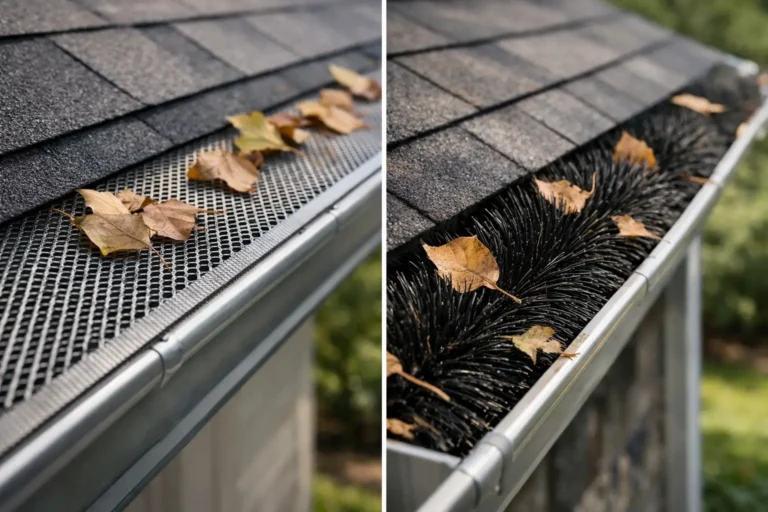
A blocked valley after one windy weekend can undo months of good weather. That is why a proper gutter guard maintenance checklist matters, even when your home already has gutter protection installed. Gutter guard cuts down cleaning and helps stop leaf build-up, but it does not mean you can ignore the roofline completely.
For Sydney homes, especially in leafy suburbs or properties exposed to storm debris, regular checks are what keep the whole system working as it should. A well-maintained gutter guard setup helps reduce overflow, protects fascia and eaves, lowers ember risk, and saves you from the bigger cost of water damage later.
Why a gutter guard still needs maintenance
Gutter guard is designed to reduce the amount of debris entering the gutter, not eliminate every maintenance need forever. Fine leaf matter, seed pods, dirt, moss, and sludge can still collect on top of the mesh, in roof valleys, and around downpipe entries. Over time, that build-up can slow water flow or push water where it should not go.
This is where many property owners get caught out. They assume the guard has solved the problem permanently, then only notice an issue once water is spilling over during heavy rain. By that point, the gutter may not be the only thing affected. Overflow can stain walls, damage paintwork, wet the soffit, and create pooling around the building.
The better approach is simple. Treat gutter guard as long-term protection that performs best with periodic professional attention.
Your gutter guard maintenance checklist
A practical gutter guard maintenance checklist should focus on performance, not just appearance. The goal is to make sure rainwater can move freely off the roof, through the gutters, and down the stormwater system without obstruction.
Check the roof surface and valleys
If leaves are collecting in roof valleys, behind flashings, or against the lower edge of the roof, that material needs to be cleared before it turns into a wet mat of debris. Valleys are one of the first places where drainage problems show up because they carry a high volume of water during storms.
On homes surrounded by gum trees or dense garden cover, valleys may need closer attention than the gutters themselves. Even a quality mesh system cannot stop debris from settling on top of the roof where wind patterns push it.
Inspect the gutter guard mesh condition
Look for lifted edges, loose fixings, sagging sections, corrosion, or areas where the mesh has been bent out of shape. If the guard is not sitting correctly, debris can get underneath it or water can overshoot the gutter line in heavy rain.
This matters even more on larger homes or commercial buildings where long roof runs place more stress on the system. A minor issue in one corner can affect how the entire section drains.
Clear debris from the top of the guard
Leaves and fine debris sitting on top of the mesh should be removed before they break down and compact. Once organic matter starts to hold moisture, it becomes heavier and harder to shift naturally with wind or rain.
This is also an important fire safety point in higher-risk areas. Dry leaf litter on top of the gutter guard can still contribute to ember exposure, even if the gutter underneath remains relatively clear.
Test downpipes and outlets
A gutter can appear clean from above but still fail if the downpipe is partially blocked. Water should flow freely from each outlet without backing up. If there is slow drainage, the blockage may be lower in the system where it is not visible from the roof edge.
This is one reason maintenance should never focus on mesh alone. The whole drainage path needs to be working together.
Check for signs of overflow or water staining
Overflow marks, staining on external walls, peeling paint, damp fascia, and muddy splash zones below the gutter line all point to a drainage issue. Sometimes the cause is debris. In other cases, it may be poor fall, undersized gutters, or an older roof profile that needs a different solution.
That is why experienced inspection matters. Not every problem is fixed with a basic clean.
Inspect brackets, gutters and roof edge condition
Maintenance is also the right time to look at the condition of the gutter itself. Rust, separated joins, damaged brackets, and sections pulling away from the fascia will affect performance regardless of how good the guard is.
A reliable system depends on both parts working together – the protection above and the guttering below.
How often should gutter guard be checked?
For most Sydney properties, a professional inspection at least once or twice a year is a sensible baseline. Timing depends on the surrounding environment. A home under heavy tree cover, near bushland, or in an area that cops regular storm debris may need more frequent checks.
Autumn and late spring are usually the key times. Autumn brings falling leaves and seed matter. Late spring is useful for clearing build-up before summer storms and bushfire season. After major weather events, it is also worth arranging an extra inspection, especially if branches, bark, or roof litter have landed across the property.
There is no single schedule that suits every building. A townhouse in a more exposed urban setting may need less attention than a large family home in a leafy suburb. The right frequency comes down to risk, roof design, and surrounding vegetation.
Why DIY checks are not always enough
A visual check from the ground is helpful, but it only tells part of the story. Debris often builds up in places you cannot see clearly, and roof access comes with obvious safety risks. Steep pitches, wet tiles, two-storey heights, and brittle older roofing all increase the chance of an accident.
There is also the quality issue. A quick hose-off or partial clean can move debris around without actually resolving the cause of poor drainage. If mesh sections are loose, valleys are holding compacted matter, or downpipes are restricted, the problem will return.
For most property owners, the safer and more effective option is to have the roof, gutters, and guard system inspected and cleaned by a specialist who deals with these issues every day.
What professional maintenance should include
A proper service should go beyond a basic leaf blow. It should include debris removal from roof surfaces and valleys, inspection of the mesh and fixings, gutter and downpipe flow checks, and a clear assessment of any areas that need repair or adjustment.
Good operators also pay attention to presentation and care. That means cleaning up the site properly, protecting the property during the work, and showing you what was found. Before-and-after photos are especially useful because they give you visible proof of the condition of the roofline and the work completed.
That level of detail matters. If you are paying for protection, you should be able to see the result.
Gutter guard maintenance checklist for different property types
Homes, strata properties, warehouses, and commercial buildings all have different maintenance needs. A single-storey house with a simple roofline is easier to inspect and maintain than a multi-unit property with box gutters, internal gutters, or complex valleys.
Commercial sites often collect dust, leaf litter, and roof debris differently from homes, particularly around HVAC units and service areas. Larger buildings may also have drainage systems that are harder to diagnose without experience.
For that reason, maintenance should match the building rather than follow a generic schedule. The best checklist is the one built around the property’s real exposure, not a one-size-fits-all plan.
Preventive maintenance costs less than reactive repairs
Most people contact a gutter specialist after they notice a problem – overflowing gutters, staining, sagging sections, or blocked downpipes. By then, the issue has usually been building for a while. Preventive maintenance is the cheaper path because it deals with small problems before they affect other parts of the home or building.
That is especially true in Sydney, where one intense storm can quickly expose weak points in the roof drainage system. A modest maintenance visit can prevent far more expensive work to gutters, fascia, ceilings, paint, and landscaping.
At DX Gutter Guard, this is exactly why ongoing care is treated as part of the protection system, not an optional extra after installation.
When to book a professional inspection
If you can see leaf build-up on the roof, water spilling over the gutter edge, staining on walls, or debris sitting on top of the mesh, it is time to have the system checked. The same applies if it has been more than a year since the last inspection, or if your property has been through strong winds or heavy rain.
You do not need to wait for a full blockage to act. A well-timed maintenance service keeps the system performing properly, protects your property, and gives you one less thing to worry about when the weather turns.
The best gutter guard system is not the one you install and forget. It is the one that keeps doing its job, season after season, because it is looked after properly.