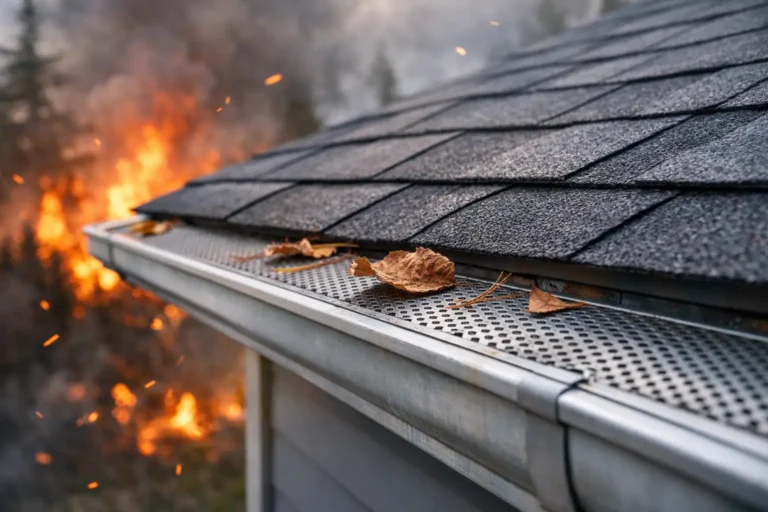
One hot, windy afternoon is all it takes for dry leaf litter in your gutters to turn from neglected mess into real fire fuel. Roof gutter fire safety matters because gutters sit exactly where embers can land, collect and smoulder – right on the edge of your roofline, beside fascia boards, under eaves and near other combustible materials.
For Sydney homeowners, strata managers and commercial property owners, this is not a minor maintenance issue. In leafy suburbs and bushfire-prone areas, built-up debris in roof gutters can increase risk during fire season and create a bigger problem than most people realise. The good news is that this risk is manageable when gutters are kept clean, protected and properly maintained by people who know what to look for.
Why roof gutter fire safety matters more than people think
Most people think about gutters in terms of stormwater overflow, sagging sections or water damage. Those are real problems, but fire risk is often the quieter issue sitting in the background.
When leaves, bark, twigs and fine debris collect in gutters, they dry out quickly in warm weather. That creates a shallow bed of fuel spread around the perimeter of the building. If wind-blown embers land in that material, the gutter can become a point of ignition. Once that happens, flames or intense heat can affect the roof edge, eaves, fascia and nearby roofing materials.
It depends on the property, of course. A home in a dense leafy street with overhanging branches faces a different level of exposure than a low-debris site in a tightly built urban area. But in Sydney, where storms, dry periods and surrounding vegetation often combine, gutter debris is one of the most preventable fire hazards on a roof.
The main fire risks hiding in your gutters
The risk is not just a few visible leaves. Fine debris is often the bigger issue because it compacts into corners and sits beneath larger material. Seed pods, bark, gum leaves and dust can build up over time, especially in valleys, behind solar panels and in sections that are hard to see from the ground.
This matters because embers do not need much to start trouble. They can lodge in dry organic matter and smoulder before anyone notices. In some cases, the danger is greater when the gutter line already has poor drainage. Damp build-up can hold sediment, then dry into dense combustible matter as temperatures rise.
Older properties can face added risk if gutters are rusted, poorly graded or loosely fixed. Newer properties are not immune either. Modern rooflines often have multiple angles, concealed collection points and more areas where debris can accumulate unnoticed.
Why overhanging trees make the problem worse
Trees do not need to be touching the roof to create trouble. Branches nearby can still drop leaves and bark into gutters year-round, and strong winds can carry debris much further than people expect. Certain tree varieties shed heavily, while others produce finer material that is harder to spot but just as problematic.
That does not always mean trees need to be removed. Often, sensible trimming combined with proper gutter protection and regular maintenance is the smarter option.
Roof gutter fire safety starts with cleaning, but it should not stop there
Cleaning is the first step because you cannot protect what is already full of fuel. Removing leaf litter, sludge and built-up rubbish lowers immediate fire risk and also improves water flow. That matters after storms, because blocked gutters can hold moisture, collect more sediment and create a repeat cycle of build-up.
Still, cleaning alone is not always enough. If your property regularly collects debris, gutters can refill quickly. That is why many owners move from reactive cleaning to a longer-term protection plan.
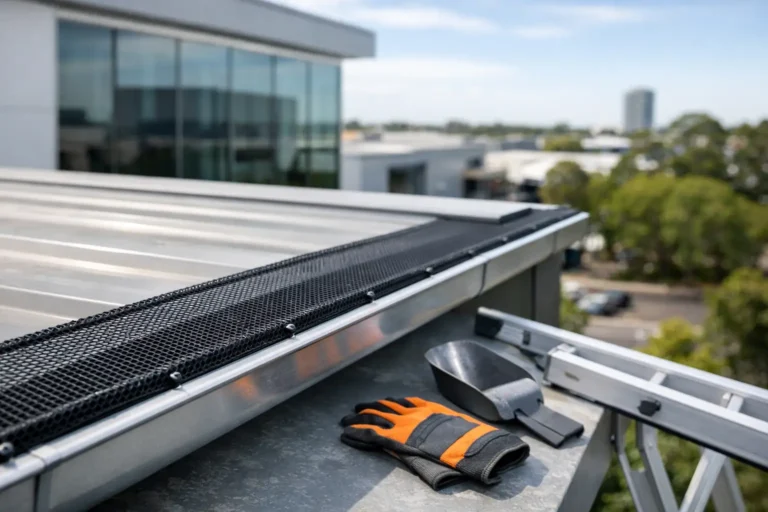
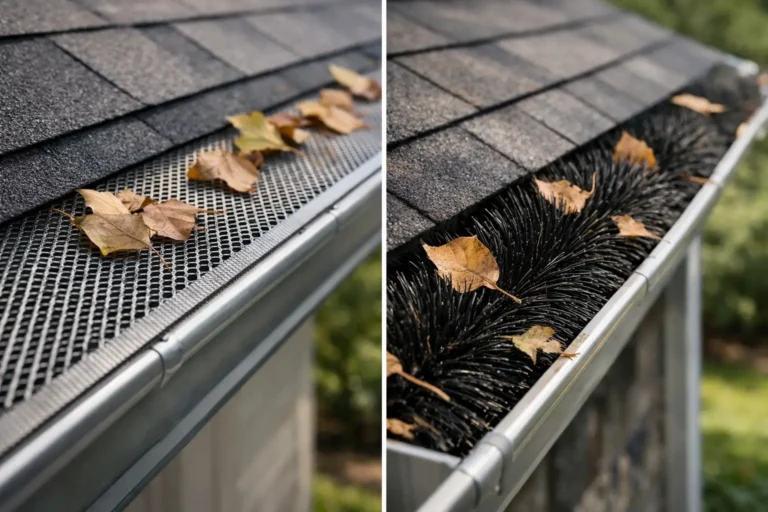
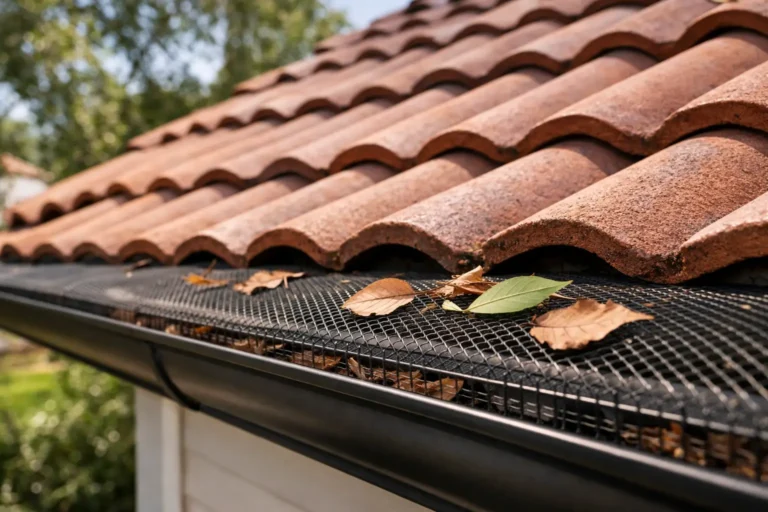
A professionally installed gutter guard can help reduce how much leaf matter enters the gutter in the first place. The right system allows water to pass through while limiting the build-up of larger debris and reducing the volume of combustible material sitting along the roof edge.
There is a trade-off here. Not every mesh product is equal, and poor installation can create gaps, lift points or maintenance headaches. The benefit comes from choosing durable materials and having the system fitted correctly to the roof profile, not from treating gutter guard as a set-and-forget shortcut.
What to look for in a fire-conscious gutter protection system
If fire safety is part of your concern, the material and installation standard matter. A flimsy product that warps, lifts or corrodes can leave openings where debris still gets in or where wind can cause movement over time.
A quality aluminium mesh system is generally the better fit for long-term gutter protection because it is durable, corrosion-resistant and suited to Australian conditions. Just as important is how the mesh is fixed, how it interfaces with valleys and roof edges, and whether the roof and gutters are properly cleaned before installation.
Preparation is where many jobs are won or lost. If debris is left underneath the guard, the risk is not removed – it is simply hidden. Proper pre-cleaning, attention to problem areas and a final inspection all make a difference to how the system performs.
Installation quality matters as much as the product
This is where specialist experience counts. Roof shapes, tile profiles, metal roofing details and drainage patterns vary from property to property. A generic approach can miss the places where debris tends to settle or where ember entry is more likely.
A specialist installer will look at the whole roofline, not just the obvious sections. That includes valleys, box gutters, downpipe entry points and any areas where past overflow or debris compaction has already been an issue.
How often should gutters be checked in Sydney?
There is no single schedule that suits every property. A home surrounded by gum trees in the Hills District or the North Shore may need more frequent checks than a commercial site with little overhead vegetation. Properties near reserves, parks or heavily treed streets usually need closer attention, especially after windy weather.
As a practical guide, gutters should be inspected before summer, checked again after major storms and reviewed more often if your property has a history of rapid build-up. If there are visible signs such as overflow marks, plant growth, stained fascia or debris spilling over the edge, waiting longer usually costs more in the long run.
For many owners, the smarter move is to stop guessing and have the roof and gutters assessed properly. That gives you a clear picture of current condition and whether cleaning alone is enough or added protection is the better investment.
Roof gutter fire safety for homes, strata and commercial buildings
The principles are the same across property types, but the level of coordination can differ. Homeowners often focus on protecting family, reducing maintenance and avoiding emergency call-outs in peak season. Strata managers may be balancing compliance, presentation and budget planning across multiple lots or buildings. Commercial owners usually want reliable risk reduction without disruption to tenants or operations.
In all cases, consistency matters. Fire risk increases when maintenance is delayed, when only the visible sections are cleaned, or when stopgap repairs are used instead of proper protection. A clear maintenance approach supported by quality workmanship usually delivers better value than repeated patch-up visits.
That is why many Sydney property owners choose specialist teams such as DX Gutter Guard rather than relying on a general handyman service. When the work is focused, the materials are fit for purpose and the result is visible, you get more confidence in the protection around your roofline.
Signs your property may need attention now
Some risks are obvious, others less so. If you can see leaf build-up from the ground, there is likely more in the hidden sections. If downpipes back up in heavy rain, debris may already be compacted inside the gutter. If the property sits under mature trees, has complex roof valleys or has not had a proper roof and gutter service in some time, it is worth acting before the hottest part of the season arrives.
The same applies if you have had ember concerns in the past or your area has a known bushfire exposure. You do not need visible damage for there to be a problem. Often, the most cost-effective time to deal with fire risk is before it becomes urgent.
Good roof gutter fire safety is not about scare tactics. It is about reducing a preventable hazard with practical work that protects the building, lowers ongoing maintenance pressure and gives you more confidence during fire season. A clean, well-protected gutter system will not solve every risk around a property, but it is one of the clearest places to start if you want real protection where it counts most.