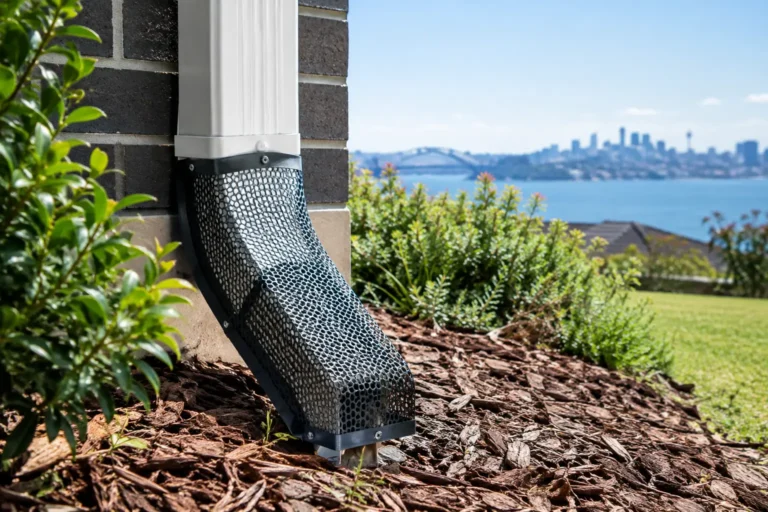
A blocked downpipe can turn a heavy Sydney downpour into water running over gutters, soaking eaves and pooling beside the building. The best downpipe protection options stop leaves and roof debris from reaching the pipe in the first place, while still allowing rainwater to drain freely when it matters most.
For homes under gum trees, near bushland, or exposed to windblown debris, this protection is not a minor add-on. It is part of keeping the entire roof drainage system working properly. The right choice depends on your roof design, gutter condition, surrounding trees and whether you need a long-term solution or targeted protection at a known trouble spot.
Why downpipes block and why it matters
Downpipes are the narrow exit point in a much larger drainage system. Leaves collect in the gutter, then get pushed towards the outlet by flowing water. Twigs, seed pods, bark and roof grit can lodge at the opening. Once a partial blockage forms, more debris catches behind it until water has nowhere to go.
Overflowing gutters can stain external walls, damage fascia boards and create moisture issues around eaves. Water discharged too close to the building can also affect landscaping and foundations over time. On commercial properties, overflowing roof water can create hazards around entries, walkways and loading areas.
In bushfire-prone parts of Sydney, dry leaves trapped around roof gutters and outlets are also a concern. No protection system removes every risk, but reducing debris accumulation supports a cleaner, safer roofline and makes ongoing maintenance more manageable.
The best downpipe protection options explained
There is no single product that suits every property. A small outlet guard may be enough for a relatively clear roof, while a leafy block with several large trees usually benefits from whole-gutter protection. The key is to choose a system that addresses the source of the blockage rather than simply catching debris after it has accumulated.
Aluminium mesh gutter guard
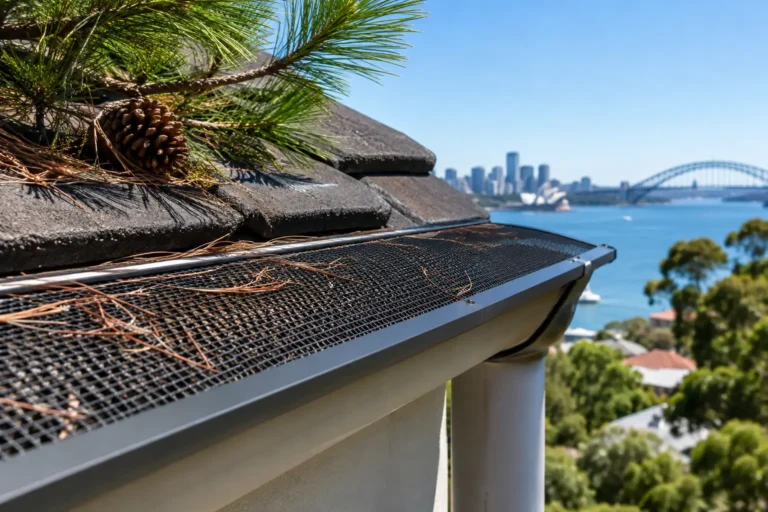
Premium aluminium mesh gutter guard is usually the strongest long-term option for homes that regularly receive leaf litter. It is fitted across the gutter line to filter leaves, twigs and larger debris before they enter the gutter and travel to the downpipe outlet.
Its main advantage is coverage. Rather than protecting only one opening, it helps keep the whole gutter channel clearer. Water can pass through the mesh while most surface debris dries and blows away, or can be removed during routine roof maintenance.
Quality matters here. A poorly fitted mesh can lift in high winds, create gaps where debris enters, or interfere with roof drainage. Professional installation should account for roof pitch, tile or metal roofing, valley areas, gutter profile and access points. The gutter also needs to be cleaned and prepared before the guard is installed. Covering existing sludge and leaves only hides the problem.
Aluminium mesh suits many Sydney homes because it is lightweight, corrosion-resistant and designed for outdoor exposure. It is not maintenance-free, particularly beneath dense trees, but it can greatly reduce the frequency and volume of gutter cleaning required.
Downpipe outlet guards
An outlet guard sits directly over or inside the gutter outlet where water enters the downpipe. It acts as a local filter, stopping larger leaves from being drawn into the pipe.
This can be a practical choice when one particular downpipe blocks repeatedly or when whole-gutter guard is not currently required. Outlet guards are generally less costly and can be useful on sheds, garages and smaller roof sections.
The trade-off is that they protect only the outlet. Leaves still build up in the gutter around the guard, and during intense rain they may form a mat that slows drainage. They require regular checks and cleaning, especially after storms. For a heavily treed property, they work best as part of a broader gutter maintenance plan rather than as the only line of defence.
Rainheads and leaf strainers
Rainheads are collection boxes fitted at the top of a downpipe, most commonly on larger buildings, heritage-style properties and some commercial sites. A leaf strainer or screen can be fitted within the rainhead to catch debris before it enters the pipe.
They provide useful access for inspection and make it easier to spot a blockage before it becomes hidden in the downpipe. They can also suit systems where several gutter runs feed into a single downpipe.
However, a rainhead has to be sized and installed correctly. If its screen becomes covered in leaves, it can overflow just like a blocked gutter. This option is often most effective where roof drainage has been assessed as a complete system, including gutter capacity and overflow provisions.
Downpipe filters for rainwater tanks
If roof water is collected for a rainwater tank, filtration at the downpipe can help remove leaf matter before it reaches the tank. These systems may include a screen, diverter or first-flush device designed to separate the initial dirty runoff from cleaner water.
They are useful for water quality, but they should not be mistaken for full gutter protection. A filter lower down the system cannot prevent leaves collecting in gutters or at the outlet above. It also needs accessible, regular servicing to avoid restricting flow.
For tank owners, a combination of well-maintained gutters, gutter guard where appropriate and a properly selected tank filter usually offers better results than relying on one device alone.
What works best for leafy Sydney properties?
For most homes surrounded by established trees, the most effective approach is professionally installed aluminium mesh gutter guard combined with clean gutters, clear downpipes and properly functioning outlets. This protects the full gutter run, not just the point where debris enters the pipe.
Outlet guards can still have a role on problem areas, such as a low roof section beneath a tree or a garage gutter that receives concentrated leaf fall. But if every downpipe is blocking after windy weather, the issue is likely debris entering and accumulating throughout the gutter system. Treating each outlet separately may become an ongoing maintenance cycle.
Properties with flat or low-pitched roofs, internal box gutters, multiple valleys or complex rooflines need closer attention. These areas can carry large volumes of water and debris into limited drainage points. The right protection needs to preserve water flow, allow inspection and meet the practical demands of the roof design.
Factors to consider before choosing a system
Start with the debris your property actually receives. Fine gum leaves, pine needles, jacaranda flowers and small seed pods behave differently to broad leaves. A product that stops large leaves may not manage fine debris as effectively, particularly where roof water flows slowly.
Consider access as well. If gutters are difficult or unsafe to reach, reducing maintenance is especially valuable. Cleaning a ground-level garage gutter is one thing; accessing a steep two-storey roof is another. Professional protection can reduce the need for frequent high-risk roof work.
The condition of the existing guttering matters too. Guard installation will not repair rusted gutters, loose brackets, poor falls or undersized downpipes. Water must be able to move through a sound system. A reliable installer will identify visible issues before recommending a solution.
Finally, think about the standard of installation, not just the material. Secure fixing, neat finishing, clear drainage paths and thorough cleanup all affect performance. Before-and-after roof photos are a useful sign that the work has been completed properly and that the area beneath the protection was cleaned first.
Protection still needs periodic care
Even the best downpipe protection options need occasional inspection. After severe storms, check for debris resting on mesh, overflowing water marks, loose sections or leaf buildup in roof valleys. If water is spilling over the gutter edge, do not assume the downpipe is clear – arrange an inspection before the next major rain event.
A professional service can clean the roof and gutters, clear downpipes, assess the drainage layout and install protection suited to the property. For Sydney homeowners and property managers, DX Gutter Guard provides premium aluminium mesh installation backed by a 20-year workmanship guarantee, with careful preparation and visible results.
A cleaner roofline does more than improve appearances. It gives rainwater a clear path away from the building, reduces avoidable maintenance and helps protect the property when the weather turns.