A roof can look fine from the ground while quietly holding leaf litter, sludge, moss and blocked valleys that are setting up bigger problems. In Sydney, where trees, storms and dry conditions all play a part, choosing the best roof cleaning methods is less about appearance and more about protecting the building, the gutters and the people underneath.
Not every roof should be cleaned the same way. The right method depends on the roof material, its age, the amount of debris present and how safely the work can be done. Get that choice wrong and you can shorten the life of the roof, force water where it should not go, or leave behind debris that simply washes into the gutters at the next bit of rain.
What makes a roof cleaning method the right one?
The best result is not just a cleaner roof surface. A proper roof clean should remove loose debris, reduce organic growth, clear water paths and leave the roof, gutters and surrounding areas in a safer condition than before. For most Sydney properties, that means looking at the whole roofline rather than treating the roof as a separate job.
Leaf build-up around ridges, valleys and gutters is a common example. You can wash part of it away, but if the debris ends up compacted in the gutter system, the problem has only moved. That is why experienced roof cleaning usually goes hand in hand with gutter clearing and a thorough clean-up below.
Best roof cleaning methods by roof type
Manual debris removal
For many homes, manual removal is the safest starting point. This method uses hand tools, brushes and blowers to clear dry leaves, twigs, dirt and built-up rubbish from the roof without forcing water under tiles or sheets.
It is especially effective on roofs with heavy leaf coverage, in valleys where debris packs down, and on properties in leafy suburbs. It also gives a clearer picture of the roof’s condition, because cracked tiles, rust spots, loose ridge capping and blocked drainage points are easier to spot once the surface debris is gone.
Manual cleaning is not the fastest option, but it is often the most controlled. On older roofs or fragile areas, that matters more than speed.
Soft washing for moss, lichen and staining
Soft washing is one of the best roof cleaning methods when the issue is organic growth rather than just loose debris. Instead of relying on high force, it uses low-pressure application and suitable cleaning solutions to treat moss, mould, lichen and algae.
This approach is commonly better for tile roofs that need a gentler touch. It helps break down growth without the same risk of surface damage that comes with aggressive pressure cleaning. It can also produce a more even result where staining has spread across large sections of the roof.
The trade-off is that soft washing is not simply a quick rinse. It needs the right products, correct application and proper runoff management. Done poorly, it can affect nearby gardens or leave patchy results.
Low-pressure rinsing
After debris is removed or treatment has been applied, low-pressure rinsing can help clear remaining dirt and residue. This works well where the roof needs washing down without the force associated with high-pressure equipment.
For many roofs, low-pressure rinsing strikes the right balance. It can freshen the surface and improve drainage while reducing the chance of dislodging tiles, damaging pointing or driving water into places it should not reach.
It still needs care. Water direction, roof pitch and drainage paths all matter, particularly around flashing, skylights and roof penetrations.
Pressure cleaning – useful, but not for every roof
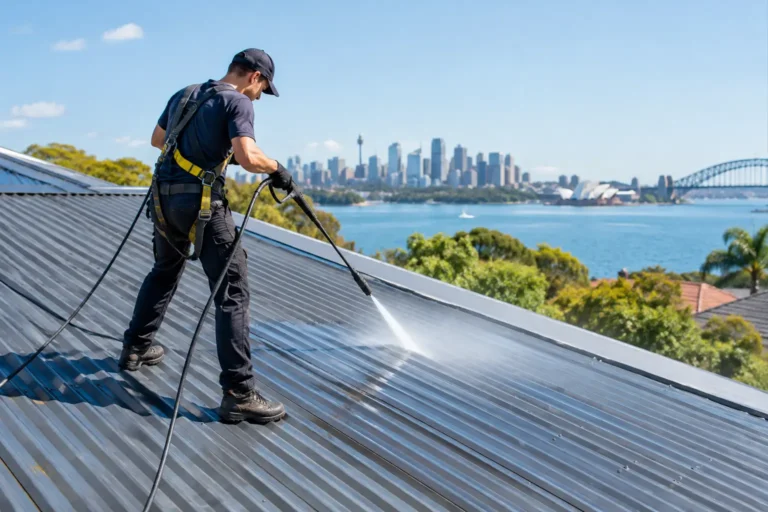
Pressure cleaning has its place, but it is the method most likely to be misused. On the right surface, in the right condition, and with proper handling, it can remove stubborn grime and built-up residue effectively. On the wrong roof, it can do real damage.
Concrete tiles, old bedding, deteriorated pointing and some painted or coated surfaces can all be affected by excessive pressure. Metal roofs also need caution, especially if there are existing weak points, corrosion or fastener issues. A roof may survive pressure cleaning and still be worse off six months later if protective finishes have been stripped or water has been driven into vulnerable areas.
That is why pressure cleaning should never be the default answer. It is a tool, not a blanket solution.
Tile roofs and metal roofs need different treatment
Sydney properties often have either tiled roofs or metal roofing, and the cleaning method should reflect that.
Tile roofs tend to collect debris in overlaps, valleys and low points. They are also more vulnerable to cracking under foot traffic and to water intrusion if cleaned too aggressively. In many cases, manual clearing followed by soft washing or controlled low-pressure rinsing is the safer path.
Metal roofs shed debris more easily, but they are not maintenance-free. Leaves still gather around flashings and gutters, and grime can build up over time. Metal surfaces can usually handle rinsing well, but harsh treatment can affect coatings or expose existing corrosion. A careful clean that clears drainage areas is usually more valuable than trying to make the roof look brand new at any cost.
Why gutter condition matters during roof cleaning
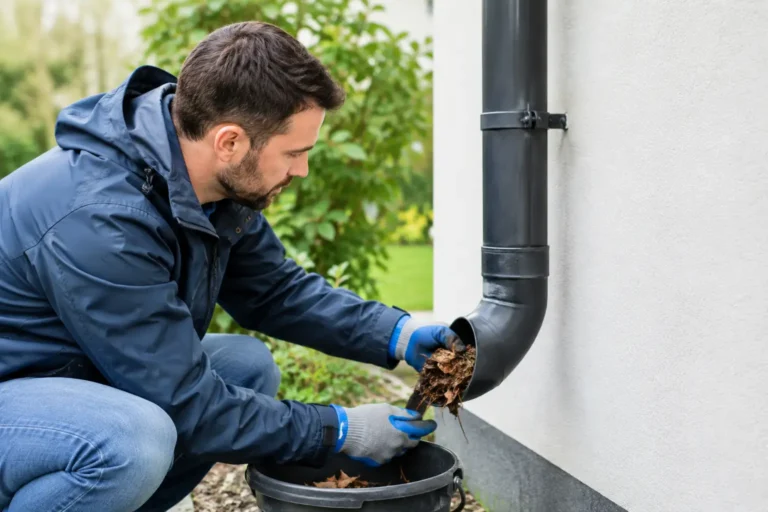
Roof cleaning and gutter performance are tightly linked. If the roof is cleaned without clearing the gutters, the next rain can wash remaining debris straight into a blocked system. That can lead to overflow, fascia damage, stained walls and water pooling where it should not.
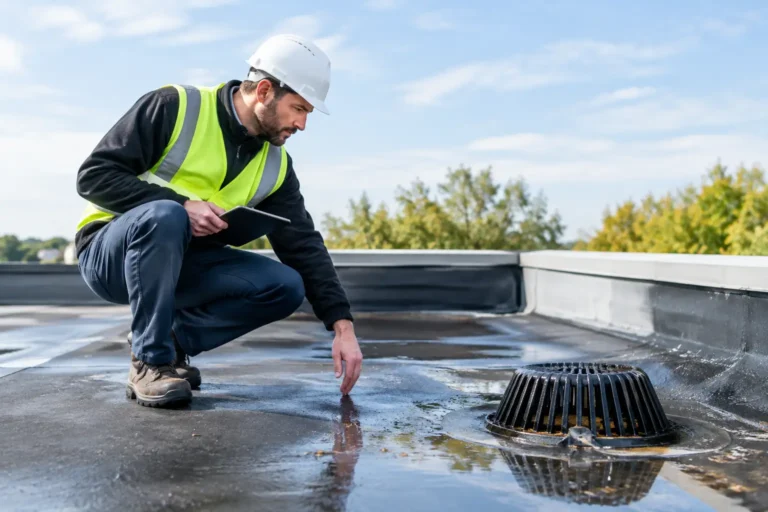
On commercial sites and larger homes, the issue is often multiplied by box gutters, long roof runs and multiple downpipes. On residential properties, the risk is usually more obvious after storms or in autumn when leaves build up quickly.
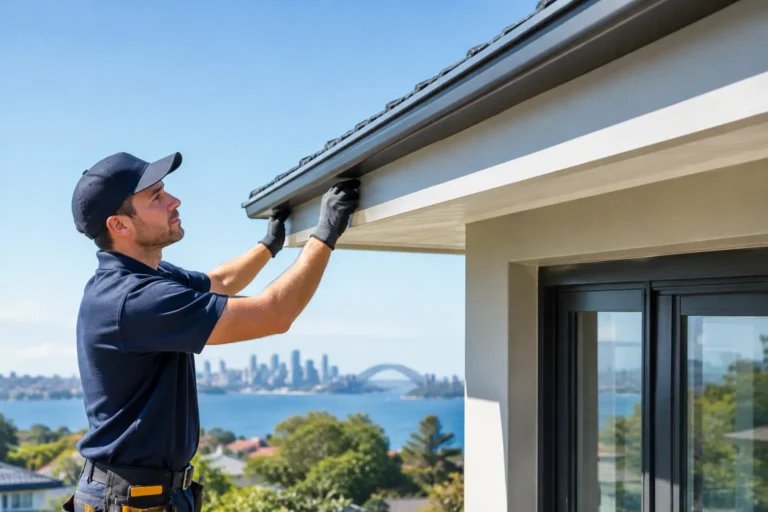
A proper service should consider valleys, gutters and downpipes as part of the same protection system. This is also where prevention becomes important. If a property repeatedly collects leaf litter, installing quality gutter guard after cleaning can reduce future build-up and cut back the need for constant maintenance.
Common mistakes property owners should avoid
The biggest mistake is treating roof cleaning as a cosmetic job. A clean-looking roof can still have blocked drainage points or debris trapped in critical areas. The second is using too much pressure because it seems faster.
Another issue is incomplete cleaning. Blowing leaves off one section of roof and leaving valleys, gutters or surrounding surfaces untouched usually creates more work later. There is also the safety risk. Roof access is not a casual weekend task, especially on steep, high or brittle roofs.
For strata managers, business owners and homeowners alike, the cheaper option can become the expensive one if the method causes damage or the job needs to be redone properly.
How to choose the best roof cleaning methods for your property
Start with the roof material and condition. A newer metal roof with light grime needs a different approach from an older tiled roof under heavy tree cover. Then look at what is actually on the roof – loose leaf litter, moss, black staining, mud, or compacted debris in valleys all point to different methods.
Next, consider risk. If there are signs of cracked tiles, rust, loose ridge capping or ongoing gutter overflow, the cleaning method should be conservative and inspection-led. The goal is to improve the roof’s performance, not put stress on already vulnerable areas.
It also helps to think beyond the clean itself. If the property has a recurring leaf problem, cleaning alone may not solve much. A long-term approach that includes gutter clearing, roof debris removal and gutter guard installation can make far more sense than paying for frequent reactive cleans.
When professional roof cleaning is the better option
For most properties, professional cleaning is the better option once height, roof pitch, debris load or roof age becomes a factor. The value is not just labour. It is knowing which method fits the roof, how to work safely, how to avoid avoidable damage and how to leave the site properly cleaned up.
That matters even more on homes surrounded by gums and deciduous trees, or buildings where blocked gutters create ongoing maintenance issues. A specialist service should be able to identify problem areas, clean thoroughly and show clear before-and-after results so there is no guesswork about what was done.
At DX Gutter Guard, that practical approach is what matters most. Roof cleaning should protect the property, support gutter performance and reduce future maintenance pressure, not just improve the view from the street.
A well-cleaned roof is not really about making the house look newer. It is about keeping water moving where it should, reducing fire-prone debris, and preventing small issues from becoming costly ones after the next storm. If your roof keeps collecting leaves, moss or grime, the best method is the one that cleans it safely and leaves it better protected for what comes next.