A ceiling stain after heavy rain rarely starts where you can see it. In many Sydney homes, the real problem begins at the roofline – and the answer to can blocked gutters cause leaks is a clear yes.
When gutters fill with leaves, twigs, dirt and sludge, water stops flowing where it should. Instead of moving cleanly to the downpipes, it backs up, spills over edges, and can be pushed under roofing materials or into vulnerable parts of the property. What looks like a minor gutter issue can turn into a roof leak, internal water damage, rotten fascia, mould growth, and expensive repairs.
How blocked gutters turn into leaks
A gutter system is designed to do one job well – collect rainwater and move it safely away from the roof and building. Once that path is blocked, water starts finding its own route.
The most common problem is overflow. During steady rain or a Sydney storm, blocked gutters fill quickly. Water then pours over the front and back of the guttering instead of entering the downpipes. If it spills over the back, it can run into the fascia, under the eaves, and toward the ceiling cavity. That is often when property owners first notice damp patches, peeling paint or water marks indoors.
There is also the issue of pooling. Wet debris holds moisture for long periods, which keeps the gutter system constantly damp. Over time, that can speed up rust, joint failure and deterioration in older metal gutters. Once seams weaken or corrosion sets in, leaks can occur even in lighter rain.
On some roofs, blocked gutters can cause water to sit high enough to creep under the first course of tiles or roof sheeting. That is especially risky where roof pitch is low, gutters are poorly aligned, or rainfall is intense. In those cases, the leak may be blamed on the roof, when the gutter blockage is the real cause.
Can blocked gutters cause leaks in every property?
Yes, but the way it happens can differ from one building to another.
A single-storey home under heavy tree cover may deal with constant leaf build-up and repeated overflow. A two-storey property might not show the problem until water appears inside an upstairs wall or ceiling. Commercial buildings can face similar issues around box gutters, large roof spans and high-volume drainage points.
It also depends on the age and condition of the guttering. Newer systems may tolerate some debris for a while, but older gutters with rust, loose brackets or failed seals are far less forgiving. A blocked gutter on a well-maintained roof is still a problem. A blocked gutter on an ageing roofline is often a much bigger one.
The early signs you should not ignore
Many leaks linked to blocked gutters give warning signs before major damage occurs. The challenge is that those signs are easy to dismiss until the next storm hits.
Overflowing water during rain is the most obvious one. If you can see water spilling over the sides instead of draining through the downpipes, the system is not coping. Sagging gutters are another common sign, as built-up debris and trapped water add weight and pull the gutter line out of shape.
You might also notice staining on external walls, flaking paint near the fascia, mildew smells, or damp spots on ceilings after rain. In some cases, birds, pests or plant growth in the gutters are a giveaway that debris has been sitting there for too long. Once vegetation starts growing in a gutter, drainage is already badly compromised.
Why Sydney properties are especially vulnerable
In Sydney, blocked gutters are not just a seasonal nuisance. They are a recurring maintenance issue because of the local mix of leafy suburbs, sudden downpours, coastal weather exposure and hot dry periods followed by storms.
Homes near gum trees, jacarandas, pines and other heavy-shedding trees can accumulate debris quickly. Even if the roof looks clear from the ground, valleys and gutters often collect fine leaf matter that turns into dense sludge when wet. That sludge blocks outlets and downpipes fast.
Then there is the storm factor. A gutter that seems manageable in dry weather can fail within minutes under heavy rainfall. Water volume exposes any weakness immediately. That is why many property owners only discover the problem during a storm, when overflow becomes visible and leaks start appearing indoors.
For some properties, there is a second concern as well – fire risk. Dry leaf build-up in gutters can become fuel for embers during bushfire season. So while the immediate question is about leaks, blocked gutters can create more than one serious problem if left unattended.
Why cleaning alone is not always enough
Gutter cleaning is essential, but on many Sydney properties it is only part of the solution.
If your home sits beneath overhanging trees or regularly collects debris from surrounding properties, cleaned gutters can block again sooner than expected. That is frustrating, especially for owners trying to reduce ongoing maintenance costs rather than simply repeating the same call-out every few months.
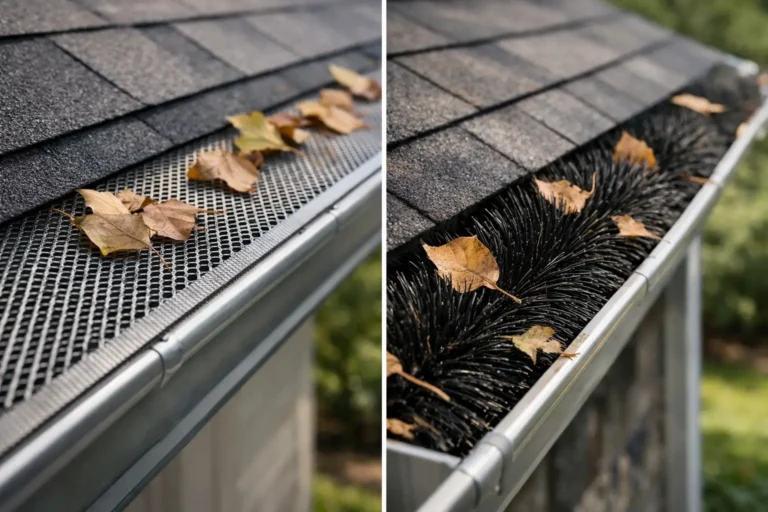
This is where professional gutter guard systems can make a real difference. A properly installed aluminium mesh guard helps prevent leaves and larger debris from settling in the gutter, while still allowing water to pass through. That does not mean the roof will never need attention again, but it can greatly reduce the frequency of blockages and the risk of overflow-related leaks.
The quality of installation matters just as much as the material. Poorly fitted products can create their own drainage issues or lift over time. A specialist approach is important because the system needs to suit the roof profile, the property layout and the debris load the building deals with throughout the year.
What happens if the problem is left too long
Blocked gutters rarely stay as a small problem. Water has a habit of finding weak points, and once it does, repair costs can climb quickly.
A simple blockage can lead to timber rot around fascia boards and eaves. It can stain brickwork or cladding, damage insulation, and create mould issues inside ceiling cavities. In more serious cases, long-term moisture can affect internal plaster, electrical fittings and structural timbers.
There is also the possibility of hidden damage. Just because the water dries out after a storm does not mean the area is fine. Repeated wetting behind walls or ceilings can continue unnoticed until visible damage becomes extensive. By that point, the cost is no longer limited to clearing gutters.
Can blocked gutters cause leaks even with no visible overflow?
Yes, and this catches a lot of people out.
Not every blocked gutter announces itself with water pouring over the edge. Sometimes the blockage is localised around an outlet or downpipe, causing water to back up in a section of the gutter where it is harder to see. On other properties, water may seep slowly into roof edges or behind the fascia without dramatic overflow.
This is one reason professional inspection is valuable. The source of a leak is not always obvious from ground level, and the visible symptom inside the property may be well away from the actual entry point.
The safest next step if you suspect a gutter-related leak
If you think blocked gutters may be causing a leak, it is best to act before the next period of heavy rain. Waiting usually means more water, more damage and less control over the repair cost.
Start with a professional inspection of the gutters, roofline and drainage points. The goal is not just to remove visible debris, but to identify whether the blockage has caused overflow marks, joint failure, rust, sagging, or water entry around the roof edge. If the property is prone to repeat build-up, it also makes sense to look at longer-term protection rather than treating each blockage as a one-off.
For homeowners and property managers who want fewer clean-outs and better protection, a specialist service can assess whether gutter cleaning, repairs or a mesh guard system is the right fit. That practical, prevention-first approach is what helps stop minor drainage issues from turning into internal leaks.
At DX Gutter Guard, we see this pattern often across Sydney properties – a leak that appears to be a roofing problem, but starts with blocked gutters that were quietly overflowing for months.
If there is one useful rule to keep in mind, it is this: gutters are easy to ignore when the weather is fine, but they do their most important work when conditions are at their worst. Looking after them before the next storm is usually far easier than repairing what the water reaches after it gets in.