A blocked box gutter can turn a heavy Sydney downpour into a costly building problem in minutes. Effective commercial roof drainage moves rainwater safely away from the roof, walls and foundations before it can pool, overflow or find its way inside. For business owners and property managers, keeping that system clear is not a minor maintenance task. It is practical protection for the property, the people using it and the budget behind it.
Commercial roofs often collect far more water and debris than they appear to from ground level. Leaves, seed pods, roof grit, tennis balls, loose packaging and storm debris all have a way of collecting at outlets and gutters. Once water cannot escape at the rate it arrives, the consequences can spread quickly.
Why commercial roof drainage needs regular attention
A drainage system is only as effective as its clearest point of exit. Gutters, sumps, downpipes, grates and roof outlets work together, but a blockage at one point can place the whole system under pressure. Water may then back up into roof sheets, overflow onto walkways or run down external walls where it can stain surfaces and damage finishes.
On a large warehouse, strata complex, office building or retail premises, the volume of water involved can be significant. A short, intense storm may deposit thousands of litres across a broad roof area. If debris has narrowed a box gutter or covered an outlet, water has nowhere to go but over the side or into the building.
The costs are not limited to a visible leak. Persistent standing water can contribute to corrosion, mould, damaged insulation and deterioration around roof penetrations. Water entering a ceiling space may affect electrical services, stock, equipment or tenant areas. A reactive repair after the fact is usually more disruptive and more expensive than planned cleaning and inspection.
The parts of a commercial drainage system that matter
Commercial roof drainage looks different from one property to the next. Some sites rely on external gutters and downpipes, while others use box gutters, internal drains, scuppers or purpose-built sumps. Older buildings may also have sections added at different times, creating awkward areas where leaves naturally settle.
Gutters and box gutters
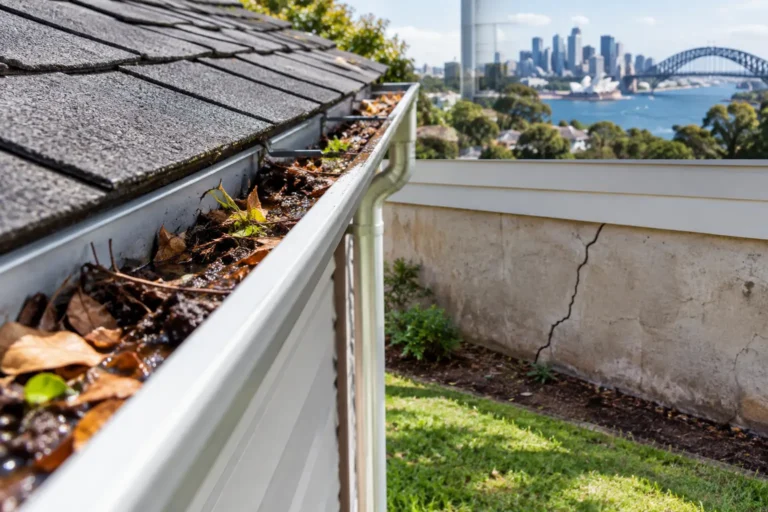
External gutters are exposed to falling leaves and windblown debris, especially around leafy commercial sites. Box gutters are often less visible but deserve particular care because they can carry high volumes of water. When a box gutter blocks, it may overflow into areas that are not designed to handle water.
A professional clean should remove compacted debris rather than simply clear a channel through it. The gutter needs to be checked for rust, loose brackets, deteriorated joints and areas where water is not draining as intended.
Downpipes, outlets and sumps
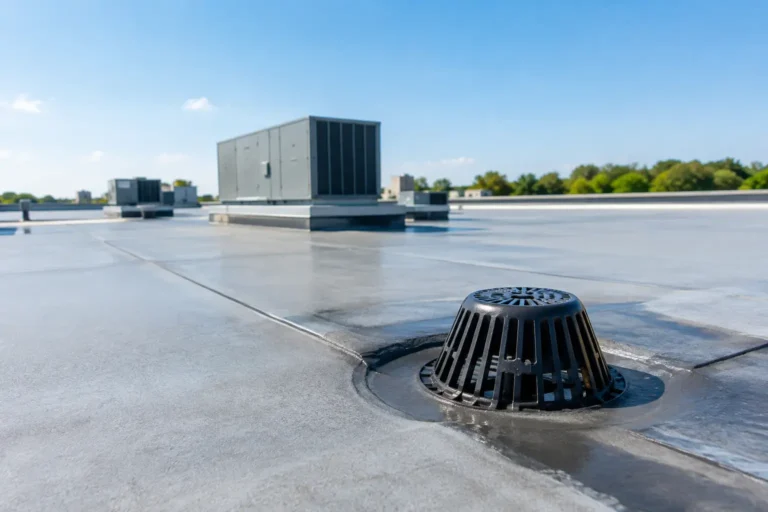
Downpipes are designed to carry water away quickly, but they can become blocked by wet leaf matter, nests and rubbish. Roof outlets and sumps can also be covered by debris that washes across the roof during rain. These areas should remain clear enough to handle a sudden downpour, not just light rain.
A blocked downpipe can be easy to miss until water pours over a gutter edge. Signs such as staining below the gutter line, overflowing during rain or water sitting near an outlet deserve prompt attention.
Roof valleys and surrounding surfaces
Drainage begins before the water reaches the gutter. Valleys direct runoff from roof sections into the collection system, and they can hold a surprising amount of leaf litter. Debris left on the roof also breaks down into fine material that can travel into gutters and outlets over time.
For this reason, roof cleaning and gutter cleaning are best treated as connected jobs. Cleaning only the gutter while leaving leaf build-up above it often means the problem returns after the next windy day.
Common warning signs of drainage trouble
Commercial properties do not always provide an easy view of the roofline, but warning signs often appear at ground level or inside the building. Overflowing water in rain, stains on exterior walls, damp ceiling tiles, peeling paint and water marks around roof edges all point to a drainage issue worth investigating.
Other clues include plants growing from gutters, sagging gutter sections, downpipes that discharge slowly, or puddles that remain on flat roof areas after reasonable drying time. Staff and tenants may also report dripping, musty smells or leaks after storms. These reports should be taken seriously, even if the leak seems to stop once the weather clears.
It is wise to document concerns with photos and arrange an inspection before the next significant rain event. For property managers, this creates a clearer maintenance record and helps avoid the uncertainty of waiting for a small problem to become an emergency.
Gutter guards can reduce debris, but they are not a substitute for design
For commercial buildings with open external gutters, quality gutter guards can substantially reduce the leaves and debris that enter the gutter channel. Premium aluminium mesh is designed to keep larger debris out while allowing rainwater to pass through, reducing the frequency of heavy gutter build-up.
The right result depends on the roof type, surrounding trees, gutter profile and existing drainage condition. Guards should be installed only after thorough cleaning and preparation. Placing mesh over a gutter that already contains debris simply hides the problem.
It is also important to be realistic about what gutter protection can and cannot do. A gutter guard will not correct damaged fall, an undersized downpipe, a failed roof membrane or a blocked internal drain. It can, however, make external gutters easier to maintain and help reduce the volume of leaf litter reaching the system. Periodic inspections remain sensible, particularly after storms and during high leaf-drop seasons.
A practical maintenance approach for Sydney properties
Sydney weather can put drainage systems through long dry stretches, windy periods and sudden heavy rain. Properties near bushland, mature trees or coastal areas may need more frequent checks than a clear, sheltered site. There is no single schedule that suits every building.
As a starting point, commercial gutters and accessible roof drainage areas should be professionally inspected at least twice a year, with additional attention before the wetter months and after major storms. Buildings under dense tree cover may need a more regular cleaning plan. Sites with flat roofs, box gutters or a history of water ingress should not rely on a once-a-year visual check.
A proper service should include safe access, removal of roof and gutter debris, clearing of accessible outlets, inspection of visible drainage components and responsible site clean-up. Before-and-after photos are particularly valuable for commercial owners and managers who need confidence that the work has been completed properly.
Safety should never be an afterthought. Commercial roof access involves height risks, fragile roofing, electrical hazards and changing weather conditions. Using an experienced, insured team protects both the people carrying out the work and the building itself.
Protect the roof before the next storm
Commercial drainage problems rarely announce themselves on a dry, clear day. They show up when rain is already falling, access is difficult and water is moving through places it should not be. Planned cleaning, careful inspection and suitable gutter protection give you a far better chance of avoiding that call.
DX Gutter Guard helps Sydney property owners and managers keep external gutters clear, clean roof areas thoroughly and install durable aluminium mesh gutter protection where it is the right fit. If leaves are building up, water is overflowing or maintenance has been delayed, arranging a professional assessment now is a practical way to protect the property before the next storm arrives.