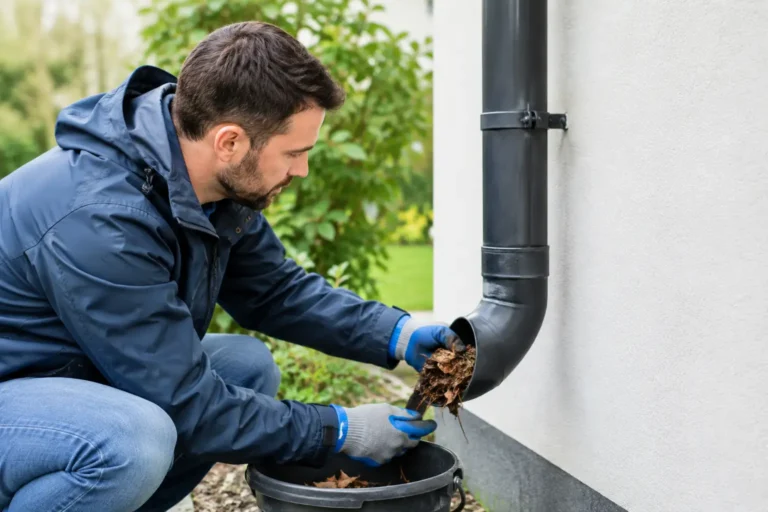
A Sydney downpour can expose a blocked downpipe in minutes. Water that should be moving safely from the roof to the stormwater system instead spills over gutters, runs down walls and pools around the home. Knowing the downpipe blockage warning signs early gives you a chance to deal with the cause before a routine maintenance issue turns into water damage.
Downpipes are easy to overlook because most of the problem sits out of sight. Leaves, seed pods, roof grit, bird nests and sludge can build up at the gutter outlet, inside bends or where the pipe meets the drain. In leafy suburbs and storm-prone areas, that buildup can happen faster than many property owners expect.
Why a blocked downpipe causes bigger problems
A gutter is only as effective as the downpipe carrying water away. Even a clean-looking gutter can overflow when its outlet is clogged or the downpipe cannot drain. During heavy rain, water has nowhere to go but over the front or back edge of the gutter.
That overflow can stain exterior walls, saturate eaves, affect garden beds and wash soil away from the base of the building. If water repeatedly collects near foundations, it may also contribute to drainage and moisture issues around the property. For commercial sites, overflowing gutters can create slippery entryways or affect areas used by staff and customers.
The right response depends on what is causing the restriction. A handful of leaves near the outlet may be a simple clean-out. A compacted blockage further down the pipe, damaged pipework or an underground drainage problem needs a more thorough assessment.
7 downpipe blockage warning signs
1. Water is overflowing from the gutter during rain
This is the most obvious warning sign. If water pours over the gutter edge while rain is falling, the gutter may be full of debris, but the downpipe could also be blocked. Pay attention to where the overflow starts. When it is concentrated near a downpipe outlet, a blockage is particularly likely.
Do not assume large gutters will cope regardless. Sydney storms can deliver a lot of water quickly, and even a partial obstruction can stop the system from keeping up.
2. Water backs up around the downpipe outlet
After rain, look safely from ground level for water sitting high in the gutter near the downpipe. A functioning outlet should draw water away rather than allow it to pool. Backed-up water commonly points to leaves and sludge packed into the outlet, a blockage in the first section of pipe, or debris trapped at a bend.
This standing water also adds unnecessary weight to the gutter. Over time, that can place pressure on brackets and fascia boards.
3. You hear gurgling, bubbling or slow draining
A downpipe does not need to be completely blocked to cause trouble. Gurgling or bubbling sounds during rain can indicate that water is fighting its way past a partial obstruction. You may also notice that one downpipe continues to trickle long after rain has stopped while others have cleared.
Partial blockages are worth addressing promptly. They catch more debris over time and often become complete blockages at the next heavy storm.
4. Stains or damp marks appear below the gutter line
Brown staining on cladding, render or brickwork can be a clue that water has regularly overflowed from the same section of gutter. Damp patches under eaves, peeling paint and discolouration around windows also deserve attention.
These symptoms do not automatically mean the downpipe is blocked. A leaking gutter joint, damaged flashing or roof issue can produce similar marks. A professional inspection helps identify where the water is actually escaping, rather than treating the visible stain alone.
5. Puddles form near the building after rain
Downpipes should discharge water into an appropriate drain or direct it away from the building through the existing drainage arrangement. If you see persistent puddles, muddy areas or soil washing away beneath a downpipe, check whether the pipe is overflowing, disconnected or unable to drain into the stormwater system.
Water at ground level may indicate a blockage in the underground connection rather than in the downpipe itself. That distinction matters, as clearing the gutter outlet will not resolve a problem further along the drainage line.
6. Leaves, moss or debris are visible at the top of the pipe
Visible debris at the gutter outlet is a clear reason to arrange cleaning. Fine material is just as troublesome as large leaves. Roof grit, decomposed leaf matter and moss can form a dense sludge that sticks to the outlet and narrows the pipe.
Properties beneath gum trees, palms or dense deciduous trees may need more frequent attention. Roof valleys are another common source of debris, as they channel leaves and twigs directly towards the gutter during wind and rain.
7. One section of gutter looks heavy, bowed or consistently wet
A gutter that remains wet after dry weather, appears to sag, or has vegetation growing from it is not draining properly. The cause could be poor gutter fall, a blocked outlet or a combination of both. In some cases, a downpipe has been installed in the wrong position for the roof area it needs to serve.
This is not a problem to ignore. Sagging gutters can pull away from fascia boards, while ongoing moisture can affect timber and paintwork around the roofline.
Common causes of downpipe blockages in Sydney
Most blockages begin with organic debris. Eucalypt leaves, bark, seed pods and small branches collect in gutters, particularly after windy weather. Once wet, that material breaks down into sludge and moves towards the outlet. A small amount can lodge in a bend or join, then catch the next wave of debris.
Bird nests, tennis balls, roof tile fragments and construction debris can also block a downpipe suddenly. Older properties may have rusted or damaged pipework that traps material, while newer homes can still experience problems if the stormwater connection is poorly drained or overwhelmed.
Gutter guards can reduce the volume of leaves entering the gutter, but they are not a substitute for proper preparation and maintenance. The roof, gutters and downpipes need to be thoroughly cleaned first. The guard also needs to be fitted correctly so water flows into the gutter while debris is directed away. A quality aluminium mesh system can significantly reduce ongoing buildup, but existing downpipe faults still need to be fixed.
What to do when you spot a problem
Avoid climbing onto the roof or working from a ladder in wet or windy conditions. Slippery tiles, wet metal roofing and unstable ladders create a real fall risk. From ground level, you can observe where water is overflowing, check for obvious downpipe disconnections and note whether the issue affects one section or the whole property.
If the weather is dry and access is safe for a qualified professional, the gutter outlet and downpipe can be inspected and cleared. A proper service should remove debris from the roof and gutters, check outlets and downpipes for restrictions, and ensure the site is left tidy afterwards. Before-and-after photos are also useful, particularly for property managers and owners who cannot safely inspect the roof themselves.
For homes in bushfire-prone or heavily treed areas, regular roof and gutter cleaning does more than protect against water overflow. Removing dry leaves and debris reduces fuel around the roofline and helps maintain a cleaner, safer property.
Preventing the next blockage
There is no single cleaning schedule that suits every Sydney property. A home surrounded by mature trees may need seasonal inspections and cleaning, especially before the wetter months and after major wind events. A more open property may need less frequent work, although roof valleys and hidden gutter sections should still be checked.
Professional gutter guard installation is often a practical long-term option where leaf fall is constant. It reduces how much debris reaches the gutters, helps lower the frequency of cleans and provides greater peace of mind during storms. The best result comes from combining durable materials with careful installation, not simply placing a product over an already clogged system.
DX Gutter Guard helps homeowners and property managers prepare, clean and protect roof drainage systems with a focus on workmanship, safety and lasting results. If you have noticed overflow, staining or pooling water, acting before the next heavy rain is a sensible way to protect the parts of your property that water can quietly damage.