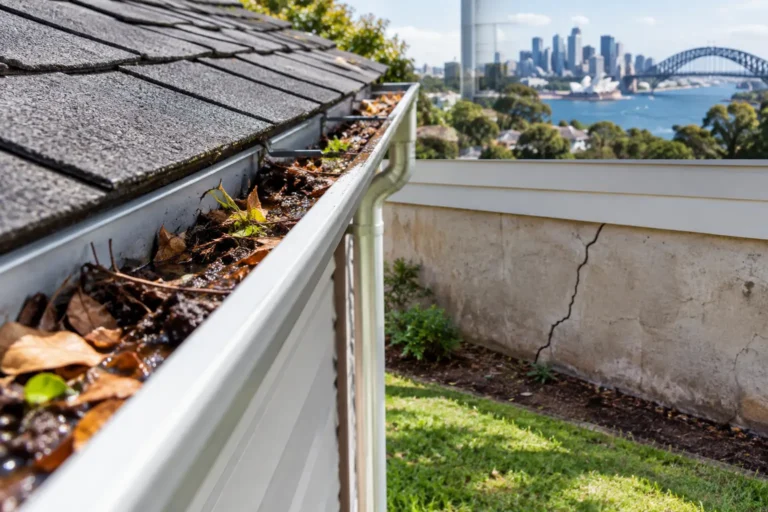
A brown stain beneath the gutter, peeling paint along the roofline, or a section of gutter that appears to sag can all point to the same issue: water is getting where it should not. To prevent fascia rot, the priority is simple – keep rainwater moving cleanly from the roof, through the gutters and into the downpipes, rather than letting it overflow onto the timber behind the gutter.
Fascia boards sit at the edge of your roof and support the guttering. They are easy to overlook because most of the problem develops out of sight. But once moisture repeatedly reaches exposed timber, rot can spread, paint can fail and gutters can lose the solid fixing they need. For Sydney homes surrounded by trees or exposed to heavy storms, regular gutter care is one of the most practical ways to protect this vulnerable part of the roofline.
What causes fascia rot?
Fascia rot is usually not caused by one big storm. It is the result of ongoing moisture exposure. Leaves, twigs, roof grit and other debris build up in gutters, stopping water from reaching the downpipe. During rain, the gutter fills and spills over its front or back edge. Overflow behind the gutter is particularly damaging because it wets the fascia board and can remain trapped there.
Blocked downpipes create the same problem. Water may look as though it is flowing through the gutter during light rain, then back up rapidly in a proper Sydney downpour. A gutter that is poorly pitched, undersized for a roof area or pulling away from its brackets can also hold water against the fascia.
Roof leaks deserve attention too. Damaged tiles, cracked flashing, deteriorated valley seals and loose roof sheets can direct water into places it was never designed to go. If staining appears in one localised area while the rest of the gutter is clear, the source may be above the gutter rather than inside it.
Timber fascia is most at risk, but metal or composite fascia does not make gutter maintenance optional. Persistent moisture can still damage fixings, paintwork, eaves and the roof structure behind it.
How to prevent fascia rot before it becomes expensive
The best protection is a roof drainage system that is clean, secure and suited to the property. That means looking beyond the visible leaves sitting in the gutter. The condition of the gutters, downpipes, roof edge and fascia all matter.
Keep gutters and downpipes clear
Gutters should be cleaned before debris turns into a compact, wet layer. This is especially important for homes under gum trees, palms, liquidambars and dense canopy trees. Fine leaf matter can form a sludge that blocks outlets even when the gutter looks reasonably clear from the ground.
Downpipes need checking as part of the same job. Clearing a gutter without clearing a blocked downpipe can leave the main drainage problem unresolved. Water should move freely at the outlet, with no pooling or slow draining sections after rain.
The right cleaning frequency depends on your surroundings. Some Sydney properties need attention once or twice a year, while leafy blocks, homes near bushland and properties with overhanging trees may need more regular inspections. After a major storm, a visual check from the ground can help identify overflowing areas before they cause repeated damage.
Make sure water flows in the right direction
A gutter is not meant to be level. It needs a gradual fall towards its downpipe outlets so water drains away instead of sitting along the roof edge. Standing water, rusting sections, overflowing corners and dark tide marks are warning signs that the fall or outlet capacity may need assessment.
Gutter brackets and screws also need to hold firm. When fixings loosen, the gutter can pull away from the fascia or change its pitch. This creates a cycle: water pools, the fascia stays wet, fixings lose their grip in deteriorating timber, and the gutter sags further.
A professional inspection is worthwhile if you can see a gutter line dipping, gaps opening behind the gutter, or water spilling from one section during rain. Small adjustments and repairs are generally far more manageable than replacing a long run of damaged fascia and guttering.
Treat roof and flashing faults promptly
Not all water damage around fascia comes from blocked gutters. Water can track under loose flashing, overflow from a roof valley, or run behind the gutter when roof-edge details are not working properly. These issues can be difficult and unsafe to investigate from a ladder.
Look for peeling paint, swollen timber, mould marks under the eaves, rust stains, drips after rain or water marks on external walls. If the signs keep returning after the gutters have been cleared, arrange for the roofline to be inspected rather than assuming another clean will solve it.
Maintain protective paint and exposed timber
Paint is not merely cosmetic on timber fascia. A sound coating helps limit moisture entering the board. Cracked, blistering or flaking paint should be scraped, prepared and repainted once the timber is dry and the cause of the water exposure has been fixed.
Painting over damp or soft timber only hides the issue temporarily. If a screwdriver easily sinks into the board, sections are crumbling, or gutter fixings no longer hold securely, replacement may be the safer option. The new fascia should be properly sealed before guttering is refitted.
Gutter guards can reduce the cause of rot
A quality gutter guard system helps reduce the leaf buildup that causes overflow in the first place. Premium aluminium mesh is designed to keep larger debris out while allowing rainwater to enter the gutter. For properties with heavy leaf fall, it can significantly reduce the amount of cleaning required and help gutters perform more consistently between maintenance visits.
It is not a substitute for every inspection. Fine debris can still settle on top of mesh, roof valleys still need to drain properly, and gutters must be installed with the correct fall. However, professionally fitted gutter guards make ongoing maintenance safer and more manageable, particularly where roofs are steep, high or difficult to access.
The installation process matters as much as the material. Guards should be fitted securely without compromising roof drainage or creating areas where leaves can collect. Before installation, the roof, gutters and valleys should be cleaned thoroughly so existing debris is not sealed beneath the mesh. This is where an experienced specialist can make a real difference to long-term performance.
Signs you may already have fascia damage
Early action can limit the repair work. From ground level, check for paint failure, dark streaks below the gutter, visible gaps, sagging gutter sections and water overflow during rainfall. Inside the property, damp smells or staining near external ceiling edges can also warrant further investigation.
Do not rely on a quick ladder look if access is awkward. Wet roofs, unstable ladders and overhead powerlines create genuine risks. A professional roof and gutter service can identify whether the issue is debris, drainage, roof condition or failing fascia, then recommend the most sensible repair path.
For property managers and commercial owners, regular roofline checks are particularly valuable. A minor overflow that goes unnoticed on a residential tenancy, strata building or commercial premises can become a larger maintenance issue when water reaches eaves, wall linings or electrical areas.
A practical maintenance plan for Sydney properties
The most effective plan is based on the property, not a one-size-fits-all schedule. Homes with few nearby trees may only need seasonal checks. Heavily treed properties should plan for cleaning before the main wet periods and after periods of heavy leaf fall. Roof valleys, gutter outlets and downpipes deserve priority because they are common choke points.
When arranging a service, ask for the gutters, valleys and downpipes to be assessed together. Before-and-after photos are also useful, particularly when much of the roofline cannot be safely viewed from the ground. They provide clear evidence of what was removed and whether any repair concerns were found.
DX Gutter Guard provides professional gutter cleaning, roof cleaning and aluminium mesh gutter guard installation for Sydney properties that need reliable, long-term protection. A properly prepared and protected gutter system helps keep water where it belongs – moving safely away from your roofline.
If you have noticed overflow, sagging gutters or peeling fascia paint, acting before the next heavy rain is the sensible move. A timely inspection can protect your fascia boards, reduce repeat maintenance and give you greater confidence that your roof drainage is ready when the weather turns.