Loose guttering rarely stays a small problem for long. A section that rattles in the wind, sags after rain or pulls away from the fascia can send water behind the gutter line and into places it was never meant to reach. Knowing how to secure loose guttering early can help protect your roofline, walls, eaves and foundations from avoidable water damage.
For Sydney properties, the cause is often a mix of heavy rain, wind-blown leaves, overflowing gutters and years of movement at the roof edge. The visible gap is only part of the issue. Before fastening anything back into place, it is worth checking why the gutter has come loose in the first place.
Start by identifying what has failed
Guttering is usually supported by brackets, clips or hangers fixed to the fascia board or, in some cases, to the roof structure. When a gutter begins to sag, pull away or sit at the wrong angle, one of several problems may be responsible.
The brackets may have bent, cracked or come loose. Fasteners can rust or work their way out over time, particularly where overflowing water keeps the area wet. The fascia board itself may also be soft, split or rotten, meaning new screws will not hold securely without repairing the timber first.
A build-up of leaves, roof grit and standing water can add considerable weight to a gutter. During a Sydney downpour, a blocked run can become much heavier than it was designed to carry. This is why a loose section should never simply be pushed back up and ignored. If the underlying blockage or water-flow issue remains, the same failure can return.
Look for these warning signs from ground level where possible: a gutter line that appears uneven, water spilling over the front edge, stains beneath the eaves, visible gaps between the gutter and fascia, or brackets that have shifted out of position. Rust streaks around joins and screws can also indicate ongoing moisture exposure.
Safety comes before a gutter repair
Working at roof height carries real risk. Wet tiles, unstable ladders, uneven ground and overhead powerlines can turn a straightforward repair into a serious accident. If the gutter is above a second storey, near electrical wiring, heavily damaged, or inaccessible without stepping onto the roof, professional help is the sensible option.
If you are inspecting a low, accessible section, use a stable ladder on firm, level ground and have another adult nearby. Do not lean sideways to reach beyond the ladder rails. Avoid the job during rain, high winds or when roof surfaces are damp.
It is also wise to stop if you find decayed fascia timber, extensive rust, a detached downpipe or signs that water has entered the eaves. These conditions often require more than replacing a bracket, and an incomplete repair can conceal a bigger problem until the next storm.
How to secure loose guttering properly
The right repair depends on whether the gutter itself is sound and whether the supporting fascia is still structurally firm. In many cases, the process starts with cleaning and inspection rather than fastening.
Clear the weight and locate the fall
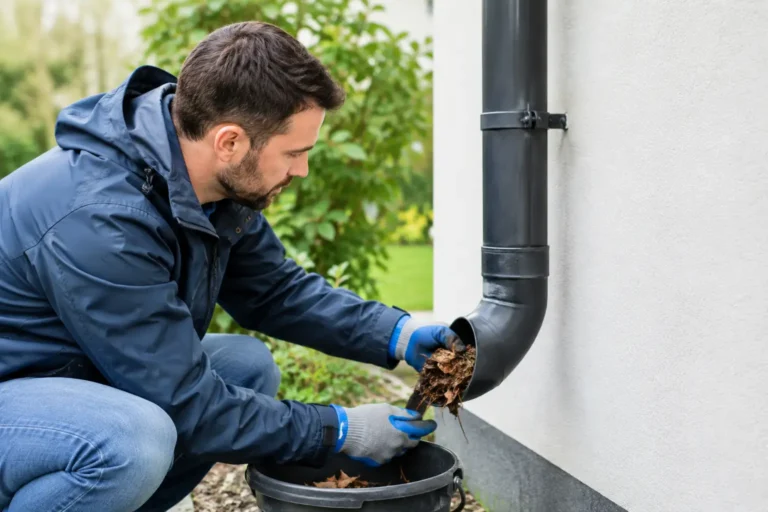
Remove leaves, twigs, roof sediment and other debris from the affected gutter and nearby downpipe opening. This reduces weight and lets you see the condition of the metal, joins and brackets clearly. A gutter that is full of debris may look as though it has failed when its supports are simply overloaded.
Once clear, check that the gutter has a gentle fall towards the downpipe. It does not need to look dramatically sloped, but water should not pool in the middle or run away from the outlet. Poor fall leaves standing water in the gutter, increasing corrosion and placing repeated strain on brackets.
Replace damaged brackets and fasteners
Bent, cracked or corroded brackets should be replaced rather than straightened and reused. New brackets need to suit the profile of the existing gutter and be positioned at appropriate intervals to support its weight, especially near corners, outlets and long runs.
Where brackets have pulled loose from sound timber, suitable exterior-grade screws can provide a secure fixing. Screws are generally more reliable than nails for this type of repair because they resist loosening from vibration and weather movement. The gutter should be held in the correct line and fall while each bracket is secured.
Avoid driving new screws into timber that feels soft, flakes apart or has dark water-damaged areas. The fastening may appear secure at first, but it will fail again when the gutter fills with water. Rotten fascia boards should be repaired or replaced before the gutter is reattached.
Check joints, end caps and downpipes
A loose gutter can place pressure on nearby connections. Inspect joins for separation, check end caps for leaks and make sure downpipes are firmly connected. If water escapes at a join, it can run down the fascia and create the very timber damage that causes brackets to loosen.
Small leaks at otherwise sound metal joins may be repaired with a compatible gutter sealant after the area has been cleaned and dried. However, widespread rust, holes, distorted sections or repeated leaking are signs that replacement may be more cost-effective than patching.
Test with water, not just a visual check
Once the gutter has been secured, test the repaired section with a controlled flow of water from a hose. Watch for pooling, overflow, leaks at joins and slow drainage at the downpipe. This simple step confirms whether the gutter is sitting correctly and whether the original issue was caused by a blockage or incorrect fall.
Do not use a high-pressure cleaner on an older gutter system as the force can dislodge seals, push water into roof spaces or damage already weakened sections.
When loose guttering points to a larger issue
Sometimes a gutter repair reveals damage that has been developing quietly for years. Repeated overflow may indicate blocked downpipes, inadequate drainage capacity or a roof valley that sends too much debris into one section. In leafy Sydney suburbs, gutters can refill quickly after cleaning if overhanging branches and roof debris are not managed.
Loose guttering can also be associated with roof-edge deterioration. Peeling paint on fascias, staining on external walls, mould beneath eaves and damp patches inside upper rooms all deserve attention. Water does not always enter directly below the loose section. It can travel along timber, insulation or ceiling framing before becoming visible indoors.
For commercial properties and strata buildings, a repair should also consider safe access and the condition of the full gutter run. Fixing one bracket on a long, ageing system may be appropriate as a short-term measure, but it is not always the best long-term decision. A professional inspection can identify whether targeted repair, fascia restoration or partial replacement offers better value.
Prevent the gutter from coming loose again
The best way to reduce repeat failures is to keep gutters clear and free-flowing. Regular cleaning removes the wet leaf matter that adds weight, retains moisture and accelerates corrosion. It also gives you an opportunity to spot loose brackets, failed seals and fascia damage before rain tests the system.
Gutter guards can reduce the amount of leaf debris entering the gutter, but they need to be fitted to a clean, sound gutter system. A quality aluminium mesh guard is designed to help keep leaves and larger debris out while allowing water to drain through. It is not a substitute for repairing loose brackets, damaged fascia or poorly pitched gutters first.
For properties surrounded by trees or exposed to frequent storm debris, professional cleaning and gutter guard installation can make ongoing maintenance more manageable. It also reduces the chance of gutters becoming heavily loaded between inspections. DX Gutter Guard prepares the roof and gutter line before installing protection, so underlying issues are not simply covered over.
When to call a professional
A qualified gutter specialist is recommended when the repair involves height, deteriorated fascia boards, widespread rust, recurring overflow or more than a few failed brackets. Professional work is particularly valuable where guttering sits close to powerlines, spans a difficult roof area or forms part of a larger drainage problem.
The right contractor should inspect the full affected area, explain what has caused the failure and recommend a repair that matches the condition of the property. Ask whether cleaning, fascia work, gutter repairs and guard installation need to be staged. A clear answer now can prevent another emergency call-out after the next heavy rain.
A straight, firmly supported gutter is a small detail with a big role in protecting your property. Address it while the issue is visible, dry and manageable, and your roofline will be far better prepared when Sydney weather turns.