A metal roof can look clean from the ground while holding leaf litter, branches, dirt and moisture in the places that matter most. This metal roof cleaning guide is designed for Sydney property owners who want to protect their roof, gutters and building without taking unnecessary risks on a ladder.
Metal roofing is durable, but it is not maintenance-free. Debris left in valleys, behind solar panels, around roof penetrations and inside gutters can trap moisture against the roof surface. Over time, that creates the conditions for staining, blocked drainage, corrosion and water entering where it should not.
Why cleaning a metal roof is more than a cosmetic job
Sydney roofs deal with a demanding mix of conditions. Leafy suburbs can produce constant gutter debris, while coastal areas bring salt-laden air that may speed up corrosion. Heavy rain can then turn a small blockage into overflowing gutters, wet eaves and water damage inside the property.
Cleaning removes the material that stops water from draining freely. It also gives a trained professional the chance to inspect areas that are otherwise hard to see from the ground, including flashing, roof screws, ridge capping, valleys and gutter outlets.
For homes near bushland or with overhanging trees, roof cleaning also has a safety benefit. Dry leaves, twigs and bark collecting in gutters and valleys add to the combustible fuel around a building. Clearing this material is a practical part of preparing a property for the warmer, drier months.
What should be checked during metal roof cleaning?
A proper clean starts with an assessment, not simply a hose or pressure washer. The roof type, pitch, age, access points, nearby trees and condition of the gutters all affect the safest approach.
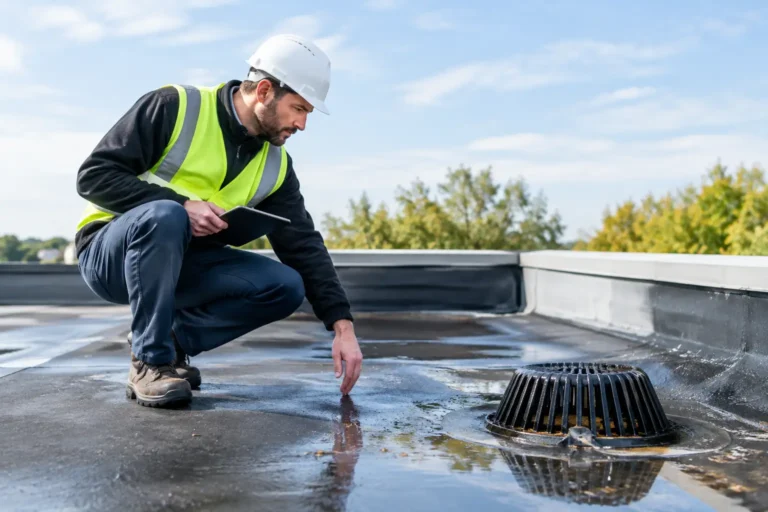
Professionals should look for debris buildup in roof valleys, around skylights, air conditioning units, solar panels and flues. These areas often hold damp leaf matter long after the rest of the roof has dried. Gutters, downpipes and rainheads also need attention because a clean roof does little good if the drainage system remains blocked.
The condition of the metal itself matters too. Minor surface dirt is normal, but flaking coatings, rust spots, loose fasteners or damaged sealant deserve closer inspection. Cleaning cannot repair existing roof damage, although finding an issue early can help prevent a more expensive repair later.
Roof valleys and gutter lines need special attention
Valleys direct a large volume of rainwater into the gutter system. When leaves and sediment build up there, water can slow down, back up and escape under roofing sheets or flashings during a downpour. Gutters that look clear along the front of a home may still be packed at the outlets, particularly beneath trees.
This is why roof and gutter cleaning are best treated as one maintenance task. Both systems need to be clear for water to leave the property as intended.
The safe way to clean a metal roof
Working at height is not a standard weekend chore. Metal roofs can be slippery even when dry, and morning dew, dust, moss, loose debris or light rain can make footing unpredictable. A fall can cause serious injury, while walking in the wrong area can dent sheets, damage coatings or disturb roof fixings.
A safe professional approach includes appropriate access equipment, fall protection where required, careful foot placement and tools suited to the roof. The cleaning method should be adjusted to the roof rather than treating every property the same way.
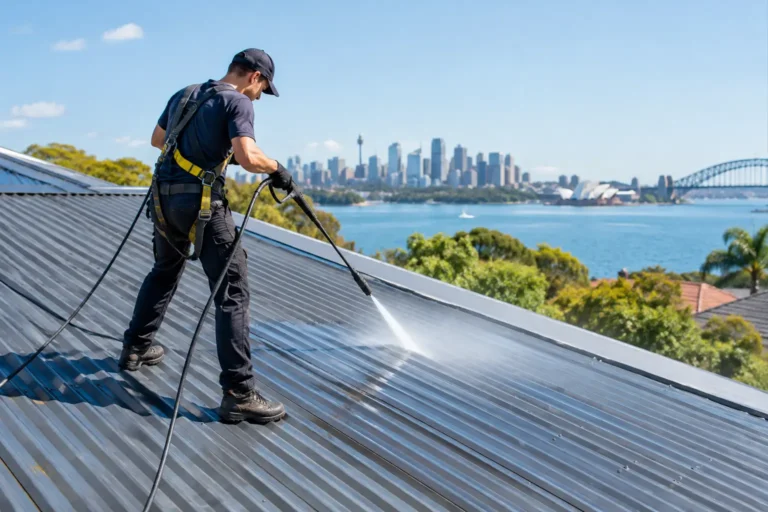
Loose debris is generally removed by hand or with controlled blowing methods, with care taken not to push rubbish into downpipes or neighbouring properties. Gutters and outlets are then cleared so water can flow. Stubborn grime may need a low-pressure rinse or a suitable roof-cleaning treatment, depending on the roof manufacturer’s recommendations and the condition of the surface.
High-pressure cleaning is not automatically the best option. Used incorrectly, it can force water beneath laps and flashings, strip protective coatings, disturb sealants or send debris into places that are harder to clear. The right result is a clean, freely draining roof, not an aggressive wash that creates new problems.
How often should a metal roof be cleaned in Sydney?
There is no single schedule that suits every property. A home surrounded by gum trees may need roof and gutter attention every six months, especially before bushfire season and after periods of high wind. A more exposed property with little tree cover may only need an annual inspection and clean.
Commercial buildings need their own assessment. Large roof areas often collect debris around box gutters, drainage points and service equipment. If a blockage occurs in one of these locations, the volume of water involved during a storm can be significant.
It is sensible to arrange a check after severe weather, particularly if branches have fallen nearby or gutters are overflowing. Water stains beneath eaves, damp patches on ceilings, sagging gutters and plants growing from gutter lines are all signs that maintenance should not wait.
Cleaning and corrosion prevention go together
Most modern metal roofs have protective coatings designed to handle Australian conditions. Their lifespan is improved when moisture and contaminants are not left sitting on the surface. Wet leaf matter is a common concern because it holds moisture against the roof and can stain or affect the coating over time.
Coastal properties may require more regular rinsing and inspections due to airborne salt. The same is true for roofs near industrial areas, busy roads or large trees that shed sap and organic material. Frequency depends on exposure, so a visual inspection is often more useful than following a rigid calendar.
Avoid using harsh chemicals, abrasive brushes or products that are not suitable for coated metal roofing. They may leave the roof looking better in the short term while reducing the protection that keeps corrosion at bay. If moss, lichen or algae are present, the treatment should be selected carefully and applied in a way that protects gardens, paths, walls and stormwater drains.
Why gutter protection helps after the clean
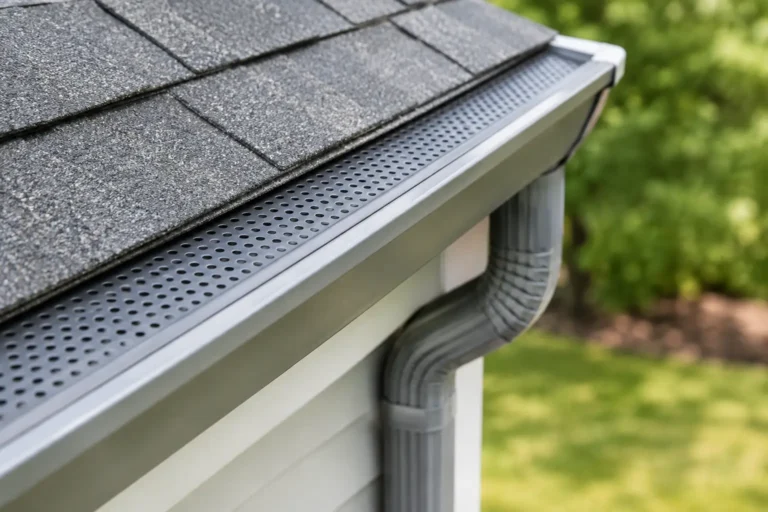
Cleaning clears the immediate problem. Gutter protection can reduce how quickly it returns. Premium aluminium mesh gutter guards are designed to keep leaves and larger debris out of the gutter while allowing rainwater to enter the system.
This is particularly valuable for Sydney properties beneath dense tree cover. Rather than repeatedly dealing with heavy gutter buildup, owners can reduce maintenance demands and lower the chance of overflowing gutters during storms. It can also limit dry debris accumulation in gutter lines, which is a worthwhile consideration for bushfire-prone areas.
Gutter guards are not a reason to ignore the roof altogether. Fine material can still settle on top of the mesh or in roof valleys, and the system should be inspected periodically. However, a professionally installed guard system makes ongoing maintenance more manageable and helps protect the work completed during a thorough clean.
When to call a professional
If the roof is steep, two storeys high, wet, damaged or difficult to access, professional cleaning is the sensible choice. The same applies where there are solar panels, fragile roof sections, significant debris buildup or signs of leaks.
A specialist team can assess the roof, clear the gutters and downpipes, remove debris responsibly and provide clear evidence of the completed work. At DX Gutter Guard, before-and-after roof photos and thorough site cleanup help customers see what has been done and feel confident their property has been properly cared for.
A clean metal roof is one of the simplest ways to protect the parts of your property that work hardest in wet weather. Arrange maintenance before a minor buildup becomes an overflowing gutter, a corrosion issue or an urgent callout after the next storm.