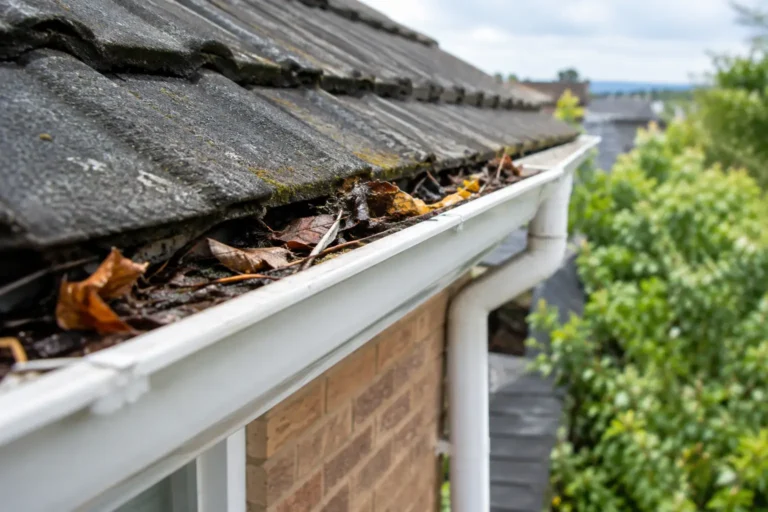
You usually do not notice your gutters until water starts going where it should not. A gutter overflowing onto eaves, pooling near foundations or spilling across a walkway is often the first visible sign that rainwater gutter problems have been building for some time. By then, what looked minor from the ground can already be affecting your roofline, walls and drainage.
In Sydney, gutters work hard. Leaf litter, storm debris, heavy downpours and periods of dry build-up all put pressure on the system. That is why early action matters. A small blockage or loose section of gutter can turn into timber rot, stained walls, pest activity or internal water damage if it is left too long.
The most common rainwater gutter problems
Some gutter issues are obvious, while others stay hidden until the next big storm. The main thing property owners need to know is that gutter problems rarely stay isolated. Once water starts escaping the system, it can affect multiple parts of the property.
Blocked gutters and downpipes
This is the most common problem by far. Leaves, twigs, seed pods and roof grit build up over time, especially on homes surrounded by trees or exposed to windblown debris. When the gutter channel fills, rainwater cannot move freely to the downpipes.
At first, the result may just be overflow in heavy rain. Over time, standing debris holds moisture against the gutter and roof edge, which can contribute to corrosion, mould and damage to nearby materials. If a downpipe is blocked as well, water has nowhere to go and backup becomes much worse.
Overflow during storms
Not every overflowing gutter is fully blocked. Sometimes the problem is that the gutter is undersized for the roof catchment, the fall is incorrect, or the outlet points cannot handle the water volume during intense rainfall. In Sydney storms, that matters.
Overflow is more than a nuisance. Water spilling over the front or back of the gutter can soak fascia boards, stain masonry and dump large amounts of water beside the building. If this happens regularly, it is worth having the full system assessed rather than just cleaned.
Sagging or pulling away from the roofline
A gutter should sit securely and maintain the right fall so water drains towards the downpipes. When brackets loosen, joints weaken or debris becomes too heavy, sections can begin to sag. You might notice an uneven line, standing water in one area or visible separation from the fascia.
This is one of those problems that tends to get worse quickly. A sagging section carries water poorly, collects more debris and places extra stress on the fixings. Eventually, parts of the system may fail altogether.
Rust, holes and corrosion
Metal gutters are durable, but they are not indestructible. Constant moisture, trapped organic matter and ageing coatings can all lead to corrosion. Small rust spots may not seem urgent, yet they often turn into pinholes or weak sections that leak during rain.
The right fix depends on the extent of the damage. A localised repair may be enough if the gutter is otherwise sound. If corrosion is widespread, replacement is usually the smarter long-term option.
Leaking joints and corners
Gutters often leak at joins, corners and connection points before they fail anywhere else. Sealants break down, movement occurs over time, and water finds the weakest spot. You may see dripping even when the gutter is not overflowing.
These leaks are easy to dismiss because they can look minor from the ground. The issue is that repeated dripping in the same place can damage timber, discolour surfaces and create ongoing moisture problems around the roof edge.
Poor fall and standing water
Gutters are designed to carry water, not store it. If the fall is too flat or incorrectly set, water will sit in sections after rain. That stagnant water attracts debris, encourages corrosion and adds weight to the guttering.
Poor fall is often a workmanship issue, but it can also develop over time as fixings move or sections settle. Either way, standing water means the system is not performing properly.
Pest and ember risk from debris build-up
Blocked gutters do not only affect drainage. Built-up leaf litter can become a nesting area for birds, insects and vermin. In bushfire-prone areas, dry debris in gutters is also a known ember risk.
For many Sydney property owners, this is a major reason to stay ahead of maintenance. Clean gutters and properly fitted gutter guard can help reduce both ongoing cleaning demand and the risk created by accumulated debris.
Why rainwater gutter problems should not be left alone
Most gutter issues start small. What changes the cost is time. Water that escapes where it should not can affect fascia boards, soffits, exterior paint, wall cavities, landscaping and paved areas. In some cases, it can also contribute to roof leaks or moisture intrusion inside the building.
There is also the safety side. Climbing onto a roof to inspect or clear gutters is not a casual weekend job, particularly on two-storey homes, commercial sites or roofs with difficult access. For many owners and managers, the real value of professional service is not just the clean gutter at the end. It is knowing the problem has been identified properly and handled safely.
Signs your gutters need attention now
A few warning signs should move the job up the list. Water spilling over the gutter edge in rain is the clearest one. So are stains on walls, plant growth in the gutter, sagging sections, dripping joints and water pooling around the base of the building after a storm.
You may also notice subtle signs between rain events. Peeling paint near the roofline, rust marks, damp patches near eaves or debris visible from the ground can all point to a system that is no longer draining as it should. If you have had to clean the same gutters repeatedly, that is often a sign the property needs a better long-term solution, not just another quick clear-out.
The fix depends on the cause
This is where experience matters. Not every gutter problem is solved with cleaning, and not every damaged gutter needs full replacement. A proper inspection should look at debris load, downpipe flow, bracket condition, fall, corrosion, outlet capacity and how water is behaving in real conditions.
If the problem is straightforward blockage, a thorough clean may restore performance. If there are loose sections, failed joints or poor fall, repairs may be needed. If leaf build-up is constant because of surrounding trees, installing a quality aluminium mesh gutter guard can make a big difference to maintenance and system reliability.
The trade-off is simple. Gutter guard reduces debris entry, but it still needs to be installed correctly and paired with proper cleaning and preparation first. Poorly fitted products can create new problems instead of solving old ones. That is why specialist installation matters.
Preventing repeat problems
The most cost-effective gutter work is the work that stops repeat callouts. For some properties, that means scheduled cleaning based on tree cover and roof layout. For others, it means combining a full gutter clean with a protection system designed for local conditions.
Property owners in leafy Sydney suburbs often deal with the same cycle every season – debris collects, water backs up, gutters overflow, and the issue returns a few months later. Breaking that cycle usually comes down to two things: making sure the existing system is in good repair, and reducing how much debris can enter in the first place.
That is the practical value of a service-first approach. Instead of treating each overflow as a one-off problem, the focus shifts to protecting the property over the long term. That is where a specialist team such as DX Gutter Guard can provide more certainty, especially when the goal is fewer maintenance headaches and better year-round performance.
When to call a professional
If you are seeing overflow, visible damage, repeated blockages or signs of water affecting the building, it is time to get the gutters checked. The same applies if your property is surrounded by trees, has difficult roof access, or has not had a proper gutter inspection in some time.
A professional service should do more than remove debris. It should identify why the issue is happening, show you the condition of the roofline and gutters clearly, and recommend the most sensible next step based on the property itself.
Gutters are easy to ignore when the weather is fine. The problem is that rain always finds the weak point first. Getting on top of it early is one of the simplest ways to protect your home or building from avoidable damage and ongoing expense.