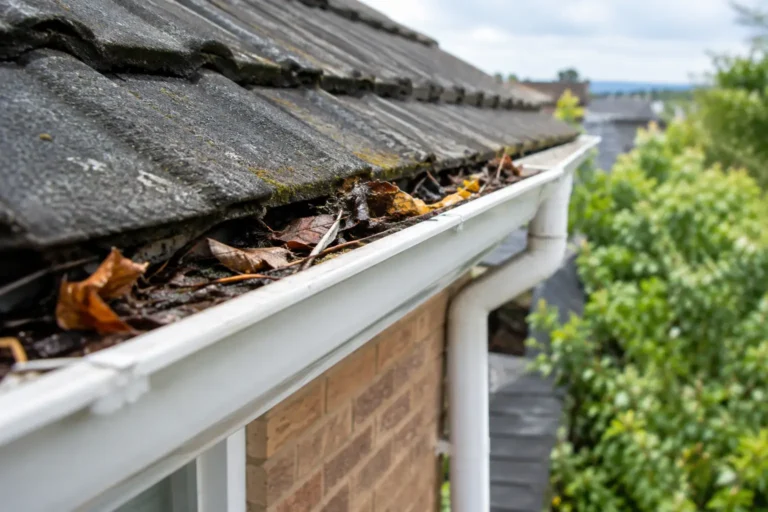
A gutter can look clear from the ground while holding a compacted mix of leaves, roof grit, twigs and mud just out of sight. Knowing the signs of hidden gutter blockages gives Sydney property owners a chance to act before the next heavy downpour sends water into places it should never reach.
Blocked gutters are not only a cleaning problem. When water cannot move freely to the downpipes, it can overflow into eaves, soak fascia boards, stain walls, damage landscaping and create damp conditions around the building. On leafy blocks and properties exposed to storms, debris can build up faster than most people expect.
Water spills over the gutter in rain
Water cascading over the front edge of a gutter is one of the clearest warning signs. It may look like the gutter is simply overwhelmed by a heavy shower, but a correctly sized, clear gutter should handle normal Sydney rainfall without overflowing.
The blockage may be sitting at the downpipe outlet, around a gutter corner or beneath a layer of wet leaves further along the run. If overflow happens in one particular spot each time it rains, that area deserves attention. Repeated overflow can saturate the soil beside your home, splash dirt onto walls and place unnecessary pressure on the gutter brackets.
It does depend on the weather. An exceptional storm can briefly exceed any drainage system. The concern is regular overflow during ordinary rain, or water continuing to pour over after the heaviest rain has passed.
Downpipes drain slowly or back up
A downpipe is designed to carry water away quickly. When it drains slowly, gurgles, overflows at the top or sends water back into the gutter, there is usually a restriction somewhere in the system.
Leaves often collect where the gutter meets the downpipe. Finer debris such as roof sediment can then settle around it and form a dense plug. In some cases, the blockage is lower inside the downpipe and cannot be seen without professional inspection.
Do not assume a clear gutter line means the system is working. A downpipe can be blocked while the gutter above appears tidy from a ladder. Clearing it properly matters because backed-up water can overflow into eaves before it has a chance to drain away.
You can see plants, moss or muddy buildup
A small weed growing from a gutter is more than an untidy detail. It means organic material has been sitting long enough to break down into a soil-like layer, retaining moisture and giving seeds a place to grow.
Moss around the gutter edge, dark sludge near outlets and clumps of decomposing leaves all point to trapped moisture. That weight can also contribute to sagging over time, particularly in older gutters or sections with loose brackets.
From ground level, you might only notice a few leaves protruding above the gutter line. The hidden problem is often beneath them, where compressed debris blocks the path to the downpipe. Roof valleys are another common source, as they funnel leaves and grit into one concentrated point during wind and rain.
Stains, peeling paint or damp eaves appear
Water marks on the eaves, peeling paint around fascia boards or stains running down external walls can indicate gutter overflow. These signs are especially worth checking after rain, when the source of the moisture is easier to trace.
Not every stain comes from a blocked gutter. A roof leak, damaged flashing or plumbing issue may also be responsible. However, if the marks sit directly below a gutter line or beside a downpipe, restricted drainage should be considered early.
Timber fascia boards are particularly vulnerable when they are repeatedly wet. Once water has worked behind paint or into joins, repairs can become more involved than a straightforward gutter clean. Addressing the cause while the issue is small protects both the appearance and condition of the property.
Gutters sag, pull away or look uneven
Gutters should follow a controlled fall towards the downpipes. If a section looks bowed, uneven or visibly full of water, it may be holding debris and standing water rather than draining as intended.
Wet leaf matter is heavy. After several rain events, a blocked section can carry far more weight than the brackets were meant to support. This can pull the gutter away from the fascia, affect the fall and make future blockages even more likely.
A sagging gutter is not usually a job to ignore until the next scheduled maintenance visit. Apart from the risk of water damage, loose guttering can become a safety concern in high winds. A professional can clean the area, assess the fixings and identify whether the gutter profile or fall needs attention.
Water pools near the foundations or paths
Water collecting beside the house after rain can have several causes, including poor surface drainage. But if it is concentrated beneath the eaves, a blocked gutter or overflowing downpipe may be directing roof water exactly where you do not want it.
Look for eroded garden beds, splashed mud on brickwork, puddles along paths and damp patches near the base of external walls. Over time, excessive water around the building can affect landscaping, create slippery areas and contribute to moisture problems.
This is one reason gutter maintenance is about more than keeping the roofline neat. The entire drainage path matters, from roof valleys and gutters through to downpipes and the point where water is discharged.
There is a musty smell or damp inside
A gutter blockage outside can eventually become an indoor problem. When overflowing water reaches eaves, wall cavities or roof spaces, it may leave a musty odour, discolour ceilings or cause paint to bubble.
If damp appears after rain, avoid assuming it is automatically a roof leak. The simplest explanation may be water overflowing behind a blocked gutter. Early inspection helps separate a drainage issue from a larger roofing concern and prevents water from continuing to enter the structure.
For commercial properties, this matters just as much. Damp around ceilings, entryways or external walls can affect tenants, visitors and day-to-day operations, so prompt investigation is the practical approach.
Birds, insects and pests gather around the roofline
Leaves and standing water create sheltered pockets that can attract pests. You may notice birds pulling material from the gutter, mosquitoes around stagnant water, or insects moving in and out of the eaves.
A clean, free-draining gutter is less inviting than one filled with damp organic matter. While pests alone do not prove there is a blockage, they are a useful reason to arrange an inspection, particularly when paired with overflow or visible leaf buildup.
Debris returns soon after cleaning
If your gutters were cleaned recently but you are already seeing leaves at the edge, slow drainage or overflow, the issue may be more than a few new leaves. Debris could be lodged in valleys, concealed at downpipe entries or accumulating in a gutter section with poor fall.
Properties beneath mature trees often need more frequent attention, especially after windy conditions. In bushfire-prone areas, dry leaf buildup also deserves prompt action because roof and gutter debris can increase ember exposure.
For many Sydney homes, a quality aluminium mesh gutter guard system is a sensible long-term option after the roof and gutters have been thoroughly cleaned and prepared. It can reduce leaf entry and the frequency of maintenance, but it is not a substitute for correct installation or periodic checks. Fine debris, roof design and surrounding vegetation all influence the right solution.
When to arrange a professional gutter inspection
Working at roof height carries real risk, and hidden blockages are easy to miss without the right access and experience. It is time to call a specialist if water is overflowing, gutters are sagging, damp marks are appearing, or you cannot safely inspect the roofline yourself.
A proper service should look beyond the visible leaves. It should include clearing gutters and valleys, checking downpipes, removing roof debris where required and leaving the site tidy. At DX Gutter Guard, the focus is on identifying the cause of the blockage and helping protect the property against the next round of rain, leaves and wind.
If something around your roofline does not look right, do not wait for a major storm to confirm the problem. A timely inspection can turn a hidden blockage into a straightforward maintenance job instead of an avoidable repair.