A gutter guard can look like a simple add-on until the first heavy storm sends water over the gutter edge, into eaves, walls, and garden beds. That is why a complete gutter guard buying guide matters. The right system can cut down maintenance, improve water flow, and help protect your property from leaf build-up, rust, overflow, and ember entry. The wrong one can create more cleaning, hide problems, and cost you twice.
If you are comparing options for a Sydney home, strata property, warehouse, school, or commercial site, the decision should not come down to price alone. Gutter guard performance depends on the mesh, the frame, the roof profile, the way it is installed, and the debris your property deals with through the year.
What a complete gutter guard buying guide should help you judge
A good gutter guard is not just there to keep leaves out. It needs to support water flow during heavy rain, sit securely on the roofline, and hold up under sun, wind, and ongoing debris load. In leafy suburbs, the system also needs to cope with gum leaves, seed pods, bark, and fine debris without becoming a maintenance trap.
That is where many buyers get caught. They compare products as if all gutter guards do the same job. They do not. Some are better suited to light leaf litter. Others are designed for harsher Australian conditions and longer-term protection. The best choice depends on your roof type, gutter shape, surrounding trees, and the level of access needed for future maintenance.
Start with the material, not the marketing
The material tells you a lot about how the system is likely to perform over time. Plastic options are usually cheaper upfront, but they can become brittle under strong UV exposure and may not offer the same long-term durability as metal systems. Foam inserts can look appealing because they are easy to fit, but they often trap fine debris and moisture, which can lead to faster deterioration and more frequent replacement.
For most residential and commercial properties, metal mesh systems are the stronger long-term option. Aluminium mesh is a common choice because it is lightweight, corrosion resistant, and well suited to Australian conditions when paired with quality components and proper installation. Steel options may work in some applications, but they need careful specification to avoid corrosion issues, especially near the coast.
The sales message might focus on the product, but the real question is simpler: will this material keep doing its job after years of sun, rain, debris, and roof movement?
Mesh size matters more than many people realise
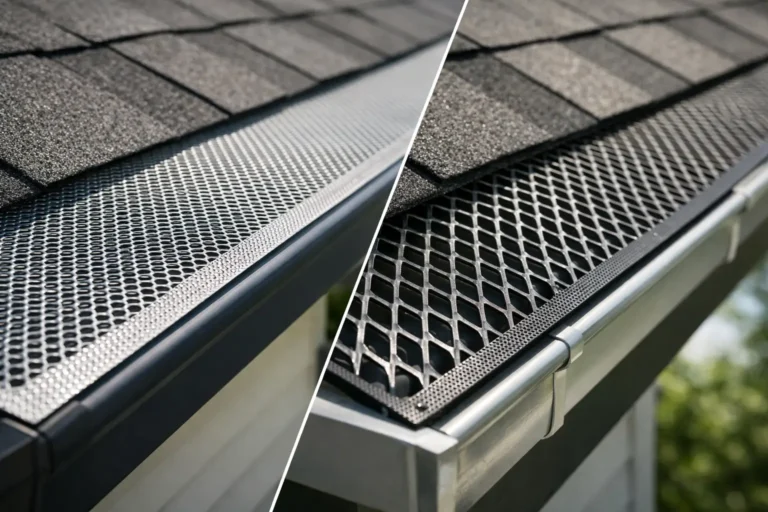
A coarse mesh may stop larger leaves, but smaller debris can still pass through and build up in the gutter below. A very fine mesh can improve protection against smaller debris and ember entry, but if it is poorly designed or installed at the wrong angle, it can slow drainage or encourage debris to sit on the surface.
This is where balance matters. You want a mesh that is fine enough to reduce blockages, but still suitable for the roof pitch, rainfall load, and debris type around your property. In bushfire-prone or ember-sensitive areas, the right mesh specification becomes even more important. It is not only about convenience. It is also about reducing risk.
The fit to your roof is just as important as the product itself
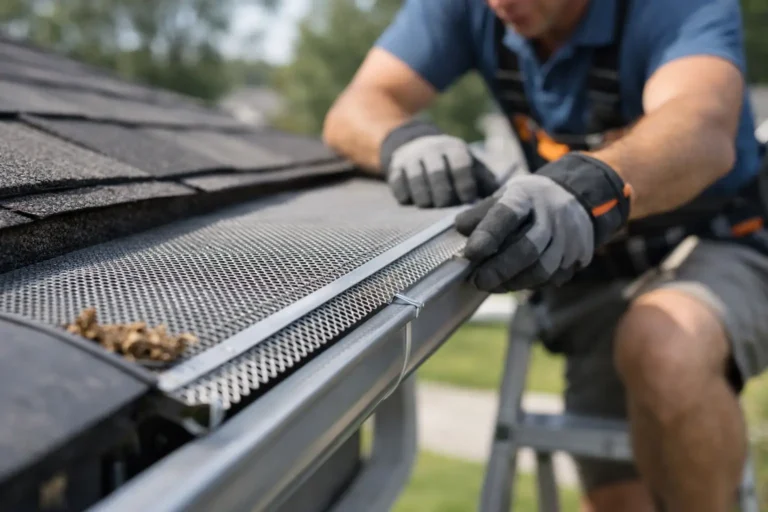
A gutter guard is only as good as its installation. Even a premium mesh can underperform if it is loosely fixed, badly tensioned, or forced onto the wrong roof profile. Tile roofs, metal roofs, box gutters, and valleys all have different requirements. So do older roofs that may already have minor wear, sagging sections, or drainage issues.
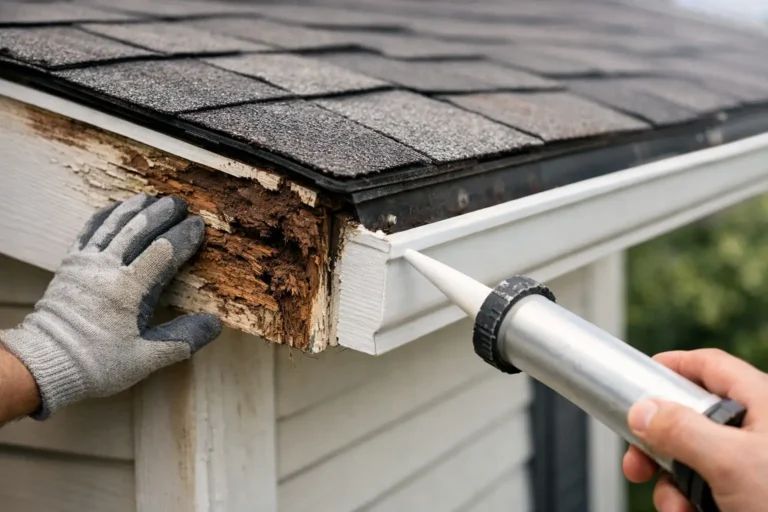
Before any guard is installed, the roof and gutters should be properly inspected and cleaned. Existing blockages, damaged brackets, rust, and poor fall need to be addressed first. Otherwise, the guard may hide problems rather than solve them.
That is one reason professional installation matters. A specialist will look at how water moves across the roof, where debris collects, and what fixing method will give the cleanest and safest result. They should also leave the site tidy and make it easy for you to see the quality of the work that has been done.
A complete gutter guard buying guide for Sydney conditions
Sydney properties deal with a mix of challenges. In some suburbs, gum leaves and twigs are the main issue. In others, jacaranda, pine needles, blossoms, or storm debris create repeated blockages. Coastal areas bring added exposure, while commercial sites may have large roof spans and box gutters that need a different approach to a standard family home.
That means there is no one-size-fits-all answer. A system that works well on a low-set suburban roof may not suit a multi-storey property with difficult access. A cheap off-the-shelf product may seem fine in the short term, but it often falls short where debris load is heavy or maintenance access is limited.
For Sydney buyers, it makes sense to ask whether the system has been selected for local conditions, not just sold as a generic solution. You want something built for Australian weather and installed by people who understand how local roofs behave through summer heat, wind events, and storm season.
What to ask before you accept a quote
A quote should do more than give you a number. It should tell you what is being installed, how the job will be prepared, and what support you will have after the work is complete.
Ask what material is being used, what gauge or grade it is, and whether the mesh is suitable for your roof and debris type. Ask whether the gutters will be cleaned before installation. Ask how the system is fixed to the roofline and whether valleys, box gutters, and problem areas are included. If the quote is vague, that is usually a warning sign.
It is also worth asking about workmanship guarantees. Product warranties can sound impressive, but if the installation is poor, the product alone will not protect you. A strong workmanship guarantee shows confidence in the job, not just the materials.
Price matters, but value matters more
It is reasonable to compare prices, especially if you are managing a larger property or multiple buildings. But the cheapest option is often cheap for a reason. Lower-cost systems may use thinner materials, weaker fixings, or rushed installation methods. They may also leave out the cleaning, preparation, and repairs needed for the system to perform properly.
A better way to compare value is to look at the full cost of ownership. If a quality gutter guard reduces cleaning frequency, lowers the risk of overflow, and lasts for years without major issues, it can save money over time. It can also reduce the stress of repeated maintenance and emergency call-outs after storms.
For many property owners, that peace of mind is a big part of the decision. You are not just buying mesh. You are buying less mess, fewer surprises, and better protection for the building.
Signs you are choosing the right installer
The right installer should be clear, responsive, and specific. They should explain what your roof needs without burying you in jargon. They should be able to show evidence of previous work, talk you through the process, and answer practical questions about durability, safety, and maintenance.
Look for businesses that specialise in gutter protection rather than offering it as a side service. Specialised installers tend to have a better understanding of roof access, product suitability, and the small details that affect long-term performance. That includes proper cleaning before installation, careful attention around roof penetrations and valleys, and a finish that looks neat from the ground.
A service-first approach also counts. Before-and-after photos, thorough site clean-up, and straightforward communication are not extras. They are part of a professional job. That is one reason many Sydney property owners prefer to work with a specialist such as DX Gutter Guard rather than taking a chance on a general handyman.
What to expect after installation
No gutter guard makes a roof completely maintenance-free. That promise is not realistic. Debris can still settle on top of the mesh, and some properties will need occasional inspection depending on tree cover and roof design.
What a good system should do is reduce the frequency and severity of gutter blockages. It should make maintenance easier, lower the chance of overflowing gutters, and help keep your roof drainage system working as it should. If installed correctly, it should also improve safety by reducing the need for constant gutter cleaning.
The best buying decisions usually come from asking a few sensible questions and looking past the sales pitch. Focus on material quality, roof compatibility, professional installation, and long-term reliability. If a system is built for your property rather than sold as a shortcut, you are far more likely to end up with protection that actually lasts.
When you are weighing up your options, choose the solution that gives you confidence every time the weather turns.