When water starts spilling over the side of your gutters in the middle of a Sydney downpour, it is rarely just a gutter problem. It is a warning sign that water is not moving off your roof the way it should. If you are wondering how to stop gutter overflow, the right answer depends on what is causing it, how often it happens, and whether the issue is isolated or built into the system.
Overflow might look minor at first. A bit of water near the eaves, a wet patch on an outside wall, a small puddle near the footings. Left alone, though, that same overflow can lead to fascia damage, stained brickwork, mould, rotted timber, foundation movement, and avoidable roof maintenance bills. In leafy suburbs and storm-prone areas, it can also become a recurring problem that keeps coming back after every heavy rain.
Why gutters overflow in the first place
Most overflowing gutters are caused by one of two things. Either water cannot get through the gutter system fast enough, or the system cannot carry the amount of water your roof is sending into it.
Blockages are the most common issue. Leaves, seed pods, twigs, sludge and roof grit build up inside the gutter channel and around downpipe outlets. Once that happens, rainwater backs up and spills over the edge instead of draining away properly. In Sydney, this is especially common on homes surrounded by gum trees or properties that cop strong wind-driven debris before storm season.
The second issue is capacity. Some gutters are simply too small, poorly graded, or connected to too few downpipes for the roof area they serve. On a light shower, they seem fine. On a serious downpour, they cannot keep up. That is why some overflows only show up during heavy rain, while others happen every time the weather turns.
There are also cases where the gutter itself is not the main problem. A roof valley may be dumping too much water into one section, a downpipe may be partially blocked below ground, or the gutter may be sagging and holding water in the wrong place.
How to stop gutter overflow by finding the real cause
The fastest way to waste money is to treat every overflow the same way. Cleaning helps in many cases, but not all. Before deciding on a fix, look at when and where the overflow happens.
If water spills over at one point only, the problem is often localised. It could be a blocked outlet, a low section in the gutter line, or debris collecting in a valley. If the whole gutter run overflows during heavy rain, capacity or poor fall may be the issue. If the gutter looks clear but water still sheets over the front edge, the rain may be overshooting because of the roof pitch or the angle of the water coming off the tiles or metal sheeting.
This is where experience matters. A proper inspection should check the gutter interior, downpipe flow, roof valleys, brackets, fall, and signs of previous water damage. You want to solve the cause, not just remove the symptom for a week or two.
Start with a thorough gutter clean
If your gutters have not been cleaned recently, this is the first place to start. A proper clean removes loose debris, compacted sludge and any blockage sitting over the downpipe outlet. It should also include clearing valleys and checking that water can move freely through the whole system.
Basic cleaning is often enough to stop overflow on homes where leaf build-up is the main issue. But there is a trade-off. If your property is in a leafy area, cleaning alone may only give you a short-term result. Gutters can fill up again surprisingly fast, especially after wind, storms or seasonal leaf drop.
For many property owners, the pattern becomes familiar. Clean the gutters, things improve, then the same overflow returns months later. That is a sign you may need a longer-term protection solution rather than repeated reactive maintenance.
Check the downpipes, not just the gutter channel
A gutter can look reasonably clear and still overflow because the downpipe is blocked. Water reaches the outlet, cannot escape quickly enough, and backs up into the gutter run. In some cases the blockage is visible at the top. In others, it sits further down the pipe or in the stormwater connection below ground.
This matters because the fix is different. Scooping leaves out of the gutter will not solve a restricted downpipe. The system needs to be tested properly so you can see whether water is actually discharging as it should.
If one downpipe services a large section of roof, even a partial obstruction can be enough to trigger overflow in heavy rain. On commercial buildings and larger homes, this is even more critical because the water volume builds quickly.
Fix sagging gutters and poor fall
Gutters need the correct fall so water moves steadily towards the downpipe. If sections have dropped, loosened, or been installed with inconsistent levels, water pools in the wrong places. Debris then settles in those low spots, making future blockages more likely.
Sagging gutters are not just unattractive. They change the way the whole system performs. During rain, water may collect away from the outlet and spill over before it ever reaches the downpipe.
This is one of those problems where cleaning will only help temporarily. If the line and support are wrong, the gutter may need adjustment, re-bracketing or replacement in sections. It depends on the age of the system and how severe the distortion is.
Consider whether your gutter system is undersized
Some overflow issues are built into the original design. A roof with a large catchment area, steep pitch or concentrated valley flow can overwhelm a standard gutter profile. This is especially noticeable during intense summer storms, when water enters the system faster than it can drain.
If the gutters are clean, the downpipes are clear, and overflow still happens in heavy rain, the system may need more capacity. That could mean adding extra downpipes, improving the way valley water enters the gutter, or upgrading sections of the guttering.
There is no one-size-fits-all answer here. What works on a small single-storey home may not suit a large roof or a commercial site. The right solution depends on roof design, rainfall exposure and how water concentrates across the property.
How gutter guard helps stop overflow
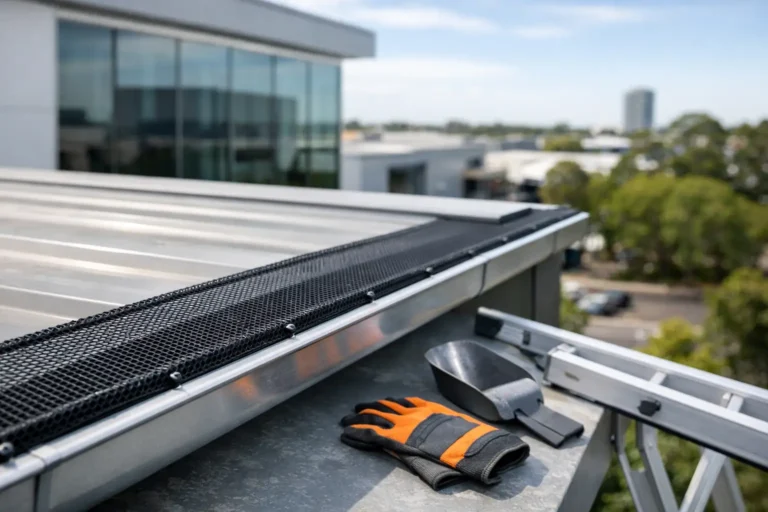
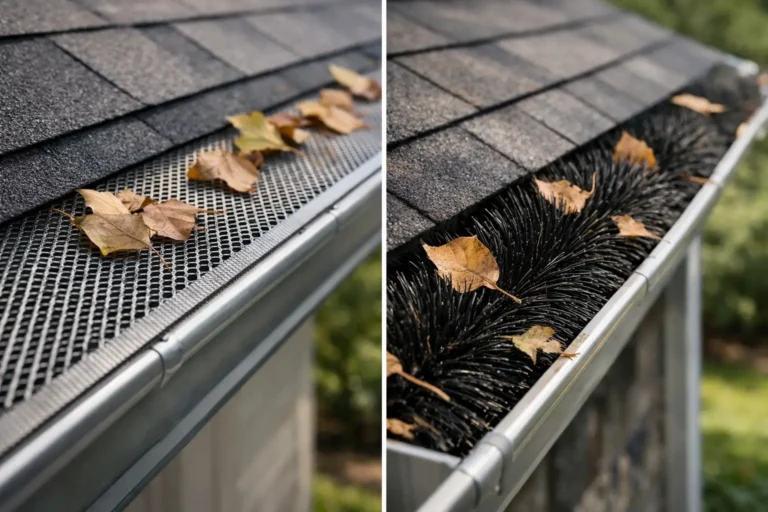
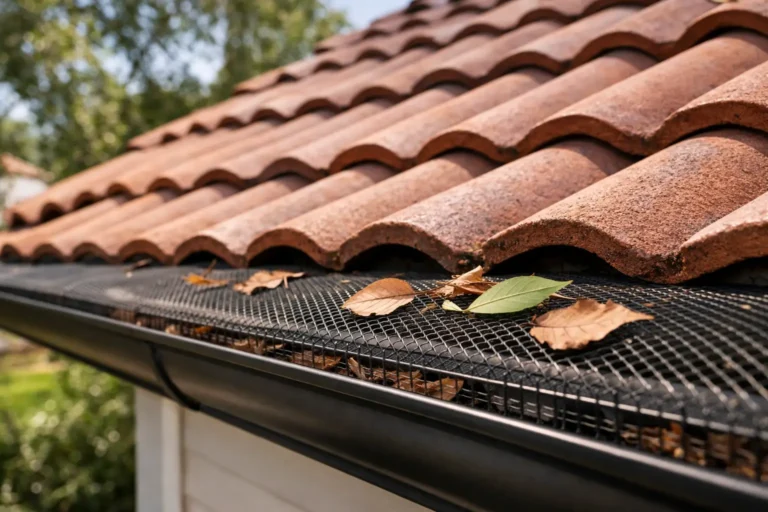
When leaf litter is the main cause, gutter guard is often the most effective long-term answer. A quality mesh system helps keep out leaves, twigs and larger debris while still allowing rainwater to enter the gutter and flow to the downpipes.
This does not mean every gutter guard product performs the same. Poorly fitted systems or low-grade materials can create new issues, including lifting, ponding or debris sitting on top of the mesh. The installation matters just as much as the material.
A professionally installed aluminium mesh system is designed to reduce blockages and cut down the need for constant cleaning. It is particularly useful on homes near trees, properties with recurring valley debris, and sites where access is difficult or unsafe. It also supports bushfire preparedness by reducing the dry leaf build-up that can collect on roofs and in gutters.
For many Sydney property owners, this is the point where maintenance becomes more predictable. Instead of waiting for the next overflow, you are reducing the conditions that cause it.
Why DIY fixes often miss the bigger issue
It is understandable to look for a quick fix when water is pouring over the gutter edge. But temporary measures often treat only what is visible from the ground. You might clear one section and miss the blocked outlet. You might wash debris out of the gutter and leave a sagging bracket untouched. You might install a cheap screen that does not suit your roof profile or local debris load.
There is also the safety factor. Working at height on roofs and ladders carries obvious risk, particularly on wet surfaces or multi-storey properties. For many homeowners and property managers, the smarter option is to have the system inspected and resolved properly rather than taking chances.
When to call a specialist
If overflow keeps returning, if water is affecting walls or foundations, or if the property is surrounded by trees, it is worth getting specialist advice. The same goes for buildings with difficult roof access, steep pitch, older guttering, or signs of stormwater issues below the downpipe.
A specialist should be able to tell you whether the answer is cleaning, repair, gutter guard, additional drainage points, or a combination of those. That clarity matters. It saves time, prevents repeat call-outs, and gives you a fix matched to the property rather than a generic patch-up.
At DX Gutter Guard, this is exactly how we approach it – by identifying why the overflow is happening, cleaning and preparing the system properly, and recommending protection that holds up over time.
A practical way to prevent it happening again
The best way to stop gutter overflow is to think beyond the next storm. Clean gutters are essential, but ongoing protection is what reduces repeat problems. If your property regularly collects leaves and roof debris, prevention will usually be more cost-effective than repeated emergency maintenance.
A well-maintained gutter system should move water away from your roof quickly and cleanly, without spilling over the sides or soaking the structure below. When it does not, there is always a reason. Find that reason early, fix it properly, and the next time the rain hits hard, your gutters should do the job they were built to do.