When rainwater spills over a gutter edge or pours from a downpipe joint, the blockage may be more than a nuisance. Water can soak eaves, stain walls, flood garden beds and find its way into roof cavities. Knowing how to clean blocked downpipes safely helps protect your property, but safety comes before getting the job done quickly – particularly on a Sydney roof after wind, rain or heavy leaf fall.
A blocked downpipe is often connected to a wider gutter problem. Leaves, twigs, roof grit and compacted sludge can collect at the outlet, then form a dense plug further down the pipe or at the underground stormwater connection. The safest approach is to assess the blockage from ground level first, use suitable tools, and call a specialist when roof access or drainage faults are involved.
Start by confirming where the blockage is
Do not assume the downpipe itself is the only issue. During light rain, look from the ground for water flowing over the gutter rather than into the outlet. On a dry day, a controlled hose test can also help. Run water gently into the gutter near the downpipe outlet and watch what happens.
If water backs up immediately at the outlet, debris is likely lodged in the gutter valley or the top of the downpipe. If it enters the downpipe but appears at a joint, water diverter or elbow, the blockage may be lower in the system. Water that disappears into the downpipe but comes back out near ground level can point to a blocked shoe, drain connection or stormwater line.
This check matters because forcing a hose into a blocked pipe can send dirty water back into the roof gutter, over the eaves or into areas you cannot see. It also avoids unnecessary work at height.
Put safety ahead of a quick fix
Most injuries during gutter and downpipe cleaning happen because people rush, work alone, or use unsuitable access equipment. Wet roofs, tiled roof surfaces, steep pitches and leaf-covered valleys are particularly hazardous. A ladder can also become unstable on uneven paving, soft soil or a sloping driveway.
Before doing anything, check the weather. Avoid roof and ladder work in rain, high winds, storms or extreme heat. Keep clear of overhead electrical wiring and never direct water near electrical fittings. Wear enclosed, non-slip footwear, gloves and eye protection. Old gutter debris can contain sharp material, mould, animal droppings and insects, so it is not something to handle with bare hands.
If you cannot safely reach the gutter outlet while keeping three points of contact on a properly secured ladder, stop there. Do not stand on a roof edge, balance from a ladder over a gutter, or improvise with chairs, wheelie bins or loose timber. The cost of a professional clean is small compared with an injury or roof repair.
How to clean blocked downpipes safely from ground level
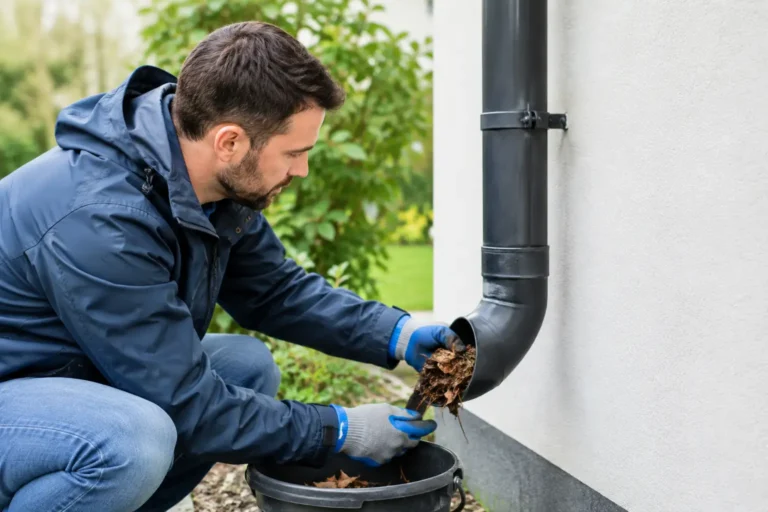
Where the lower section of the downpipe is accessible, start at the easiest point. Many downpipes have a removable lower bend, pop, shoe or inspection opening near the ground. Place a bucket or tarp underneath before opening it, as compacted leaves and black sludge can fall out quickly.
Remove visible material by hand with gloves, then use a garden hose to flush the pipe. Begin with a gentle flow rather than full pressure. If the water runs freely, increase the flow briefly to carry remaining debris through the system. Keep watching the outlet and the gutter above so you can stop if water begins backing up.
For a blockage just inside the pipe, a flexible drain rod or hand auger may help. Feed it carefully and turn it slowly. The aim is to break up debris without splitting a joint, puncturing older pipework or forcing the blockage deeper into underground drainage. Avoid sharp metal objects, as they can damage PVC downpipes and may catch on elbows.
A wet and dry vacuum can be useful for dry leaf litter near an accessible opening, but it is not a solution for a deep, waterlogged blockage. It is also not suitable if there is any risk of electrical contact or if the pipe has a concealed fault.
Once water is flowing, reconnect any removed sections securely and run a final hose test. Check every joint for drips. A downpipe that has come loose, cracked or separated from its outlet will not protect the building, even if the blockage has been cleared.
Avoid methods that can damage your drainage system
Chemical drain cleaners are not designed for leaf, mud and roof debris blockages. They can damage materials, create splash hazards and leave dangerous residue in water that flows into garden areas or stormwater. They also will not remove a compacted mass of leaves lodged around a bend.
High-pressure water equipment needs care too. Used incorrectly, it can force water behind fascia boards, damage seals or blast a pipe joint apart. Pressure can be effective in trained hands, but it should not be the first response to an unknown blockage – especially where the downpipe connects to underground stormwater.
Do not hammer the pipe or repeatedly push hard against resistance. PVC can crack, metal downpipes can deform, and a hidden loose connection may fail completely. A simple blockage can become a replacement job if the pipework is damaged.
When the blockage starts in the gutter
If leaves are visibly packed around the downpipe outlet, the gutter needs cleaning before the pipe can work properly. This is where the job becomes higher risk. Reaching into a full gutter from a ladder is awkward, and debris often conceals sharp screws, gutter brackets or nests.
A professional gutter clean removes the debris from the whole run, not just the outlet. That is important because the next shower can wash remaining leaves straight back into a freshly cleared downpipe. Roof valleys, gutter corners and low points also need attention, as they are common places for debris to collect.
For homes beneath gum trees or in leafy Sydney suburbs, repeated blockages are a sign that cleaning alone may not be the most practical long-term answer. The right gutter guard system can reduce leaf build-up while still allowing rainwater to enter the gutter. It does not remove the need for occasional maintenance, particularly after storms, but it can greatly reduce the frequency of heavy cleans and emergency call-outs.
Signs you should call a gutter specialist
Some downpipe issues are best left to experienced professionals with the right access equipment and roof safety procedures. Arrange help if the blockage is above ground level, the roof is steep or slippery, the property is two storeys or more, or the ladder cannot be positioned safely.
You should also seek an inspection if the same downpipe blocks repeatedly, water is entering the building, the gutter is sagging, or water pools around the base of the property. These signs can indicate undersized drainage, poor gutter fall, a damaged pipe, or a blocked underground stormwater line rather than simple leaf build-up.
For strata, commercial and rental properties, professional servicing also provides a clearer record of maintenance. That can be valuable when managing tenant concerns, planning preventative works or addressing water damage before it becomes a larger repair.
DX Gutter Guard provides thorough gutter and downpipe cleaning as part of a practical protection-first approach. A proper service should include removal of roof and gutter debris, checking water flow, careful site cleanup and clear advice where damaged sections or ongoing leaf exposure need attention. Before-and-after photos can give property owners confidence that the work has been completed properly, including the areas they cannot safely inspect themselves.
Keep downpipes clear between services
After a major clean, inspect gutters and downpipes from the ground after strong winds and heavy rain. Look for overflowing water, staining beneath gutters, damp patches near walls and debris collecting around downpipe outlets. Clearing leaves from the ground-level shoe and keeping nearby branches trimmed back where practical can reduce the load on the system.
The goal is not to turn every homeowner into a roof worker. It is to notice small warning signs early, before blocked water has a chance to damage the parts of your property that are expensive to repair. If access is unsafe or the cause is unclear, choosing a specialist is the sensible way to keep the water moving and your property protected.