You usually notice it in the middle of heavy rain – water spilling over the gutter edge, running down walls, pooling near the base of the building and making a mess of what should be a simple drainage system. If you are asking why are gutters overflowing, the short answer is that water is not moving through the system the way it should. The longer answer matters, because the cause will tell you whether you need a clean, a repair, or a more permanent fix.
Overflowing gutters are not just untidy. In Sydney, they can lead to fascia damage, stained walls, damp issues, soil erosion, slippery paths and preventable wear around the roofline. On some properties, especially in leafy suburbs, the same problem keeps coming back because the gutter is being overwhelmed by debris long before the next storm arrives.
Why are gutters overflowing during rain?
Most of the time, an overflowing gutter means one of three things. It is blocked, it is not draining properly, or it is not set up to handle the amount of water coming off the roof. Sometimes more than one issue is happening at once.
A blocked gutter is the most common cause. Leaves, twigs, seed pods, dirt and roof grit collect in the channel and stop water from flowing freely to the downpipe. Once rain starts falling heavily, the water backs up and spills over the front or rear edge. If the blockage sits near the downpipe outlet, even a small amount of debris can cause a surprising amount of overflow.
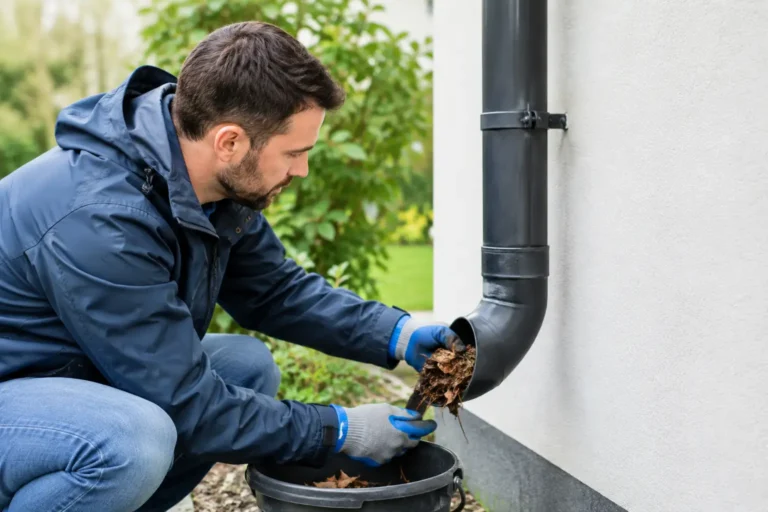
The next issue is a blocked downpipe. From the ground, the gutter may not even look that full, but if the downpipe is choked with debris, water has nowhere to go. It rises quickly and starts pouring over the gutter instead. This often catches property owners off guard because the real blockage is hidden inside the pipe.
There is also the question of capacity. Some roofs shed a large volume of water very quickly, especially during intense Sydney storms. If the gutter profile is too small, the fall is poor, or the number of downpipes is not enough for the roof area, the system can overflow even when it is relatively clean. In that case, cleaning helps, but it will not solve the underlying problem.
The most common reasons gutters overflow
Leaf and debris build-up
This is the one most people expect, and for good reason. Homes near gum trees, jacarandas, pines and other shedding trees can fill up fast. Fine debris is often the bigger problem than large leaves because it creates a dense layer of sludge that holds water and slows drainage.
Once that build-up gets wet, it becomes heavy and compacted. Water then runs over the top instead of through the gutter system. If left too long, that same debris can encourage rust, sagging and pest activity as well.
Blocked downpipes and outlets
A gutter can look only partly filled but still overflow because the outlet hole or downpipe is blocked. Debris tends to collect at the lowest point, which is exactly where the water needs to exit. In heavy rain, the bottleneck becomes obvious.
This type of blockage can also send water back under the roof edge or into areas it should never reach. That is when a drainage problem starts turning into a building maintenance problem.
Incorrect fall or poor installation
Gutters need the right fall so water moves toward the downpipes instead of sitting in the channel. If sections are too level, back-pitched or uneven, water pools where it should be draining away. Over time, those low spots collect more debris and make overflow worse.
Poor installation can show up in other ways too. Brackets may be spaced badly, joins may sit unevenly, or the gutter may be set too high or too low against the roofline. These details matter more during a storm than they do on a sunny day.
Gutters that are sagging or damaged
Older gutters can sag under the weight of water, debris or corrosion. Once the line drops in the wrong place, water collects there and struggles to reach the outlet. Even if there is no major blockage, the trapped water can spill over the edge during moderate rain.
Cracks, separated joints and rust holes also change how the system performs. What starts as a small maintenance issue can gradually affect the whole run.
Valley overflow and roof runoff issues
Sometimes the gutter is not the main problem at all. If roof valleys are blocked with leaf litter, rainwater can shoot over the gutter edge in a concentrated sheet. From the ground, it looks like the gutter has failed, but the roof is actually sending too much water to one point too quickly.
This is common on homes with complex rooflines or areas that collect debris faster than the rest of the roof. It is one reason a surface-level inspection does not always tell the full story.
Inadequate gutter protection
If your property needs constant cleaning, the system may be working against the environment around it. In leafy areas, open gutters often become a repeat maintenance issue rather than a one-off problem. Professional gutter guard can reduce the amount of debris entering the system and help water move more consistently, but the mesh needs to be suited to the roof and installed properly to do its job.
Signs the overflow problem is getting serious
A bit of water splashing over in extreme weather is one thing. Ongoing overflow is another. If you notice staining on external walls, peeling paint around the fascia, mouldy smells near eaves, puddling near footings or water marks around entry points, the issue is already affecting more than the gutter.
You may also see plants growing in the gutter, birds pulling out nesting material, or sections that look bent and full even in dry weather. These are all signs the system needs attention. For commercial properties and strata sites, recurring overflow can also create slip hazards and complaints from tenants or occupants.
When cleaning is enough and when it is not
If the problem is fresh debris build-up and the gutter system is otherwise sound, a thorough clean may be all that is needed. That means clearing the gutter channels, checking valleys, flushing outlets and making sure downpipes are actually draining. A proper clean should also leave the site tidy, not covered in wet leaf mess.
But cleaning is not always the fix. If gutters are rusted, misaligned, undersized or installed with poor fall, overflow will return. The same applies when there is a design issue, such as not enough downpipes for the roof catchment. In those situations, the right solution might include repairs, adjustments or a gutter guard system that reduces recurring blockages.
This is where experience matters. A quick clean can make a problem look solved for a few weeks, while the real cause stays in place.
Why overflowing gutters matter more in Sydney
Sydney properties deal with a mix of conditions that put guttering under pressure. Sudden downpours can dump a lot of water fast. Leafy suburbs create constant debris. Bushfire-prone areas raise concerns about dry leaf build-up sitting in roof gutters. Salt air in some coastal areas adds another layer of wear over time.
That means overflow is not just a rainy-day annoyance. It can be part of a broader maintenance risk that affects the roofline, drainage and long-term condition of the building. For many owners, the goal is not just to stop the current overflow. It is to stop the cycle of clean, block, overflow, repeat.
How to prevent gutters from overflowing again
The best prevention depends on why the gutters overflowed in the first place. Some properties simply need regular professional cleaning because of surrounding tree cover. Others need damaged sections repaired or the fall corrected so water can move properly.
Where debris is the main issue, quality gutter guard can make a real difference by reducing leaf entry and helping cut back on repeat maintenance. It is not a licence to ignore the roof forever, but it can turn a high-maintenance system into a far more manageable one. On homes and commercial buildings that cop regular debris build-up, that added protection often saves time, lowers risk and helps avoid emergency call-outs during storm season.
If you are seeing water come over the edge more than once, it is worth having the full system checked rather than treating it as bad luck. A specialist service, like DX Gutter Guard, will usually look beyond the obvious blockage and assess the condition of the gutters, downpipes, valleys and overall setup before recommending the next step.
A good gutter system should move water quietly and efficiently, even in rough weather. If yours is overflowing, it is telling you something is off. The sooner you deal with it, the easier it is to protect the roof, the walls and everything below them.