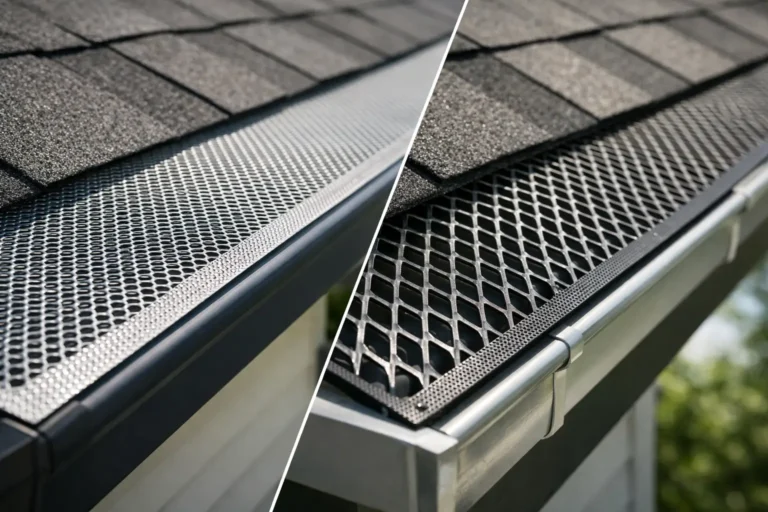
Anyone who has cleaned gutters after a Sydney storm knows the pattern. Leaves pack into the channels, mud settles underneath, water starts spilling over the edge, and what should have been a simple maintenance job turns into a messy, risky chore. That is exactly how gutter guards reduce cleaning – by stopping a large share of debris from entering the gutter system in the first place, so buildup happens far more slowly and far less aggressively.
For homeowners, strata managers and commercial property owners, the real value is not that gutter guards make gutters maintenance-free. They do not. The value is that they reduce the frequency, intensity and cost of cleaning while helping protect the building from overflow, rust, and preventable water damage. When the right system is installed properly, the difference is noticeable.
How gutter guards reduce cleaning over time
Without protection, open gutters act like catch trays for whatever lands on the roof. Gum leaves, twigs, seed pods, dirt, bird nesting material and windblown rubbish all wash into the gutter line. Once that debris gets wet, it compacts. After that, even a decent amount of rain can struggle to move water through to the downpipes.
A quality gutter guard works as a barrier over the gutter opening. Rainwater can pass through the mesh, while larger debris stays on top where it is more likely to dry out, blow away, or be removed before it creates a blockage. That simple change has a big impact on cleaning requirements. Instead of digging compacted sludge out of the gutter channel several times a year, maintenance usually becomes lighter and less frequent.
This matters even more on properties surrounded by trees. In leafy parts of Sydney, gutters can fill quickly, especially in autumn, after storms, or during long dry periods when debris accumulates and then washes down all at once. A guard does not stop every bit of fine material, but it can dramatically reduce the volume entering the system.
The biggest reason cleaning becomes easier
The hardest part of gutter cleaning is rarely the leaves sitting loosely on top. It is the soggy, decomposing material that has settled inside the gutter and started to break down. That material clings to the metal, traps moisture and creates the kind of blockage that takes time to remove properly.
When gutter guards are fitted, most of that heavy internal buildup never gets the chance to form. Debris remains on the outer surface instead of collecting deep inside the gutter run. In practical terms, that means less hand removal, less flushing, less mess around the property and less time spent on ladders or roof access equipment.
For commercial sites and larger residential properties, that reduction in labour can be significant. Cleaning an unprotected gutter system often involves more frequent site visits, more safety planning and more time on the roof. A guarded system still needs inspection, but the work is generally faster and more predictable.
Why reduced cleaning does not mean no maintenance
This is where honest advice matters. No gutter guard system eliminates maintenance altogether. Fine dust can still settle, roof valleys can still collect debris, and some locations simply experience heavier leaf fall than others.
The difference is that maintenance shifts from repeated deep cleans to periodic inspections and lighter servicing. In many cases, the gutter line stays clearer for longer, and issues are easier to deal with before they become costly. That is a much better position for any property owner.
Less debris means fewer blockages and overflows
Cleaning is not just about appearance. Most people arrange gutter cleaning because the system has started failing. Water spilling over the front edge, staining on walls, damp around eaves, and pooling near the foundations are all signs that the gutter cannot drain properly.
By reducing the amount of debris entering the gutter, guards help lower the chance of blocked downpipes and overflow during heavy rain. That protects more than the gutter itself. It helps protect fascia boards, external paintwork, garden beds, paved areas and the building envelope.
This is one of the reasons professional installation matters. If the guard is poorly fitted, water can track incorrectly, debris can catch at the edges, and the system may not perform the way it should. A well-installed aluminium mesh system is designed to sit securely and direct water into the gutter while keeping out the bulk of leaf litter.
How gutter guards reduce cleaning costs, not just cleaning frequency
The cost benefit is often overlooked. People tend to compare the price of installing gutter guards with the price of a single clean, which does not tell the full story. The better comparison is against years of repeated cleaning, reactive callouts after storms, and repairs caused by blocked gutters being left too long.
If a property currently needs frequent cleaning because of surrounding trees, the savings can build over time. There is also the less visible cost of disruption. Booking maintenance, arranging access, dealing with overflow during bad weather and worrying about roof safety all add up.
For property managers, this matters from a planning point of view as well. A system that reduces cleaning demands helps make maintenance schedules more manageable and lowers the chance of urgent issues between routine services.
Safety is part of the benefit
One of the least discussed answers to how gutter guards reduce cleaning is safety. Gutter cleaning is not a low-risk household task. Working at height, moving across roofs, handling wet debris and using ladders around powerlines or uneven ground can all create hazards.
The less often a roof requires full gutter cleaning, the fewer times someone needs to be up there doing physically awkward work. For homeowners, that means less temptation to attempt a dangerous DIY clean. For businesses and managed properties, it means less exposure to maintenance risk and fewer situations where urgent access is needed after a blockage causes overflow.
That does not remove the need for professional inspections, but it does reduce the number of high-effort cleaning jobs required over the life of the property.
Bushfire and storm conditions make the difference clearer
In many Sydney areas, gutter guards are not only about convenience. Dry leaf matter sitting in gutters can become a fire hazard during bushfire season, especially when embers are a concern. Reducing the amount of combustible debris in the gutter line is a practical step towards a safer property.
Storm conditions also highlight the value quickly. When gutters are already full of leaves, sudden downpours push the system past its limit. Water has nowhere to go, so it spills over and can enter places it should not. A guarded gutter that has been properly prepared and maintained is far less likely to fail that way.
This is why the best results usually come from a complete service, not just fitting mesh over neglected gutters. Cleaning, checking the existing system and installing the guard properly all work together.
Not every property gets the same result
There are trade-offs, and the honest answer is that performance depends on the site. A home under heavy tree canopy may still need more regular roof and gutter checks than a property with minimal leaf exposure. Fine debris from certain trees can still accumulate over time. Roof pitch, gutter profile and nearby vegetation also affect outcomes.
That does not mean gutter guards are not worth it. It means expectations should be realistic. The aim is reduced cleaning, fewer blockages and easier maintenance – not a promise that the gutters will never need attention again.
Choosing the right system matters
Material quality and installation quality have a direct impact on how much cleaning is reduced. A durable aluminium mesh system is designed to handle local conditions, resist corrosion and maintain its shape over time. Cheap or badly fitted products can sag, lift, trap debris or fail to manage water properly.
The preparation work matters just as much. If gutters are not cleaned thoroughly before installation, existing sludge and blockages remain hidden underneath. That undermines the whole point of the system. A proper job starts with getting the gutter line clear, checking for problems and then fitting the guard carefully to suit the roof and gutter profile.
For customers in Sydney, working with a specialist rather than a general handyman service often makes the difference between a system that simply looks good on day one and one that keeps performing year after year.
A practical way to protect your property
When people ask how gutter guards reduce cleaning, the short answer is simple: they keep most debris out, so gutters stay clearer for longer. The better answer is that they also reduce the hassle around maintenance, lower the chance of overflow, improve safety and help protect the property from avoidable damage.
For many homes and commercial buildings, that means fewer clean-outs, less mess and more confidence going into storm season. And if your gutters are constantly filling with leaves, the smartest next step is not to keep cleaning the same problem – it is to deal with the cause properly.